What makes Escher x nendo a successful exhibition?

Nation Gallery of Victoria has held a stunning exhibition at this summer 2018/19. The spark indeed is ignited by Dutch graphic artist M.C Escher and world renown Japanese design studio Nendo. The exhibition features more than 160 exceptional drawings lithographic prints and woodcut printmaking pieces by Escher [1], based on his ideology, Nendo created an enveloping installations and projection mapping. It is the exhibition of collaborating both artist and designer in a first-rate and enigmatic visual experience.

     The exhibition is separated into 6 parts according to 6 types of theme that Escher intrigued. Relatively Nendo created 6 projects according to Escher’s skill of creativity, observation of the world, fascination of reflections, enigmatic patterns or structures and the infinity from visual aspect.

Day and night》(1937)(Figure 1)  was one of his most well-known piece which he printed over 650 copies.[1] At first glance of this master piece, it depicts a group of white wild goose and a group of black wild goose are flying in reversed direction over a countryside town. Looking though the structure of this work, the town is absolute symmetrical but in reversed colour of black and white. The right-hand side of picture seems like night time of the town, the left-hand side is at its day time. Start from the centre of this landscape, the white wild gooses flying from day time gradually merging into the night time sky, versa the black flock merging into the day time. Looking through this piece vertically, both black and white birds gradually transiting into ground square farmland meanwhile tessellating with each other. Form visual perspective, it is composited by very neat complex elements, the transition from day and night, landscape to sky and shifting from flying birds to fixed landscape. Escher developed extremely precise details with every object which is definitely impressive.

    Intertwining between the design world and artist’s mind, Nendo indeed adopts the ideology from Escher’s perspective of tessellation of art by simply just using black and white to present conspicuous of contrast to create environmental illusion. The Transforming house (Figure 2) project seeks Escher’s constant research in to the ‘regular division of the plane’[2]. In this project by grasping Escher’s mind of graphic architect, Nendo created a house establishment shows up as a three-dimensional decoration in which a line of four dark houses steadily changes into a column of five white houses. The four front house roof step by step open up and out, as though turned back to front, until the spaces outside to the houses at the ones in the front have turned out to be inside spaces at the back. They made the project a wonder tessellated installation in a mathematical way, the principle of angles of the roof brings a sense of journey as the viewers passing through.

  Throughout the whole exhibition, NGV has provided not only visual art display experience but also combined with all aspect of the sensors that we human capable of. From aural perspective, it started with gentle slow music speaking the story of Escher’s early life, as the viewers going forward the music starts getting more euphoria and intensive. Nendo’s project were placed in between Escher’s work regarding to his life journey and evolution of his perception to optical art. According to Adam Mack has mentioned in his article The politics of Good Taste, supermarket chain designer have been attempting to climax “the sensory pleasure of grocery shopping” [3] since 1950s, the principle of giving a pleasant experience to the audience can also apply to this exhibition but in order to interpret the engagement between the artist and designer. By selling this luxury visual experience, NGV has make their viewers feel themselves as having a ‘good taste’ [4] in art to attract more people willing to pay for the entry of this exhibition.

    National Gallery of Victoria had made Escher X nendo undoubtedly one of the most blockbuster exhibitions this year. Not as those big names in the art world, Escher was relatively infame in the mass especially contemporary society, however, NGV made the invitation to nendo which shares the same interest with Escher in paradox tessellation and optical illusion, upholds the same spirit of craftsmanship, has brought the attraction to the audience by its terrific aesthetic and sensory experience whilst integrating tremendous influence of social media nowadays.

       Figure.1
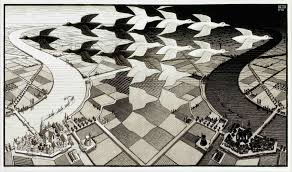
《Day and night》

Figure.2
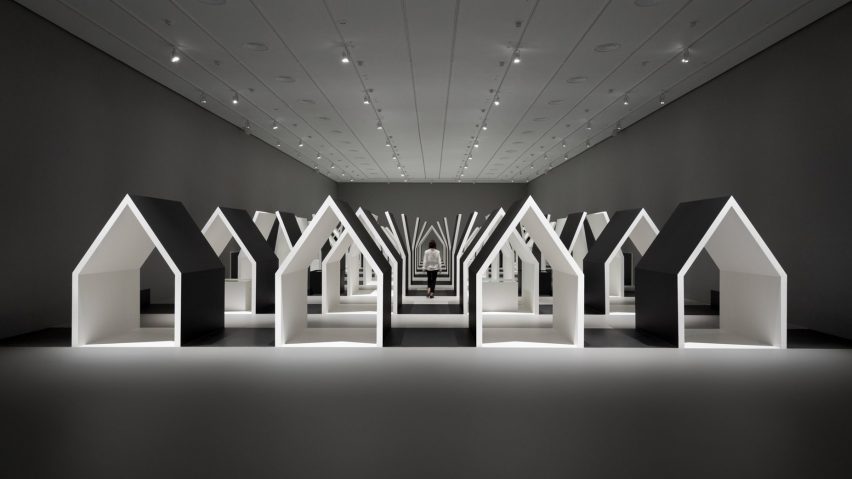
The transforming house

[1][2]National Victoria of Gallery, https://www.ngv.vic.gov.au/exhibition/escher-x-nendo-between-two-worlds/.

[3] [4] Adam Mack, The politics of good taste.

Chris Stannard – The Forgotten Hero in Australian Political Design

It is rare to see an artist who is not interested in fame or money, who is not phased with making it in the history books but whose sole interest is purely for the bettering of the world. This forgotten artist is Chris Stannard. Chris Stannard, although nowadays nameless, was one of the largest artists on the forefront of the Political Poster scene in Queensland in the 1990s. One of the founding members of the political artist group, Inkahoots, Stannard created a multitude of pieces which was his vector to serve as the voice of the nation of Queensland to stir political progress. 

To understand these posters produced by Stannard, it is important to know the context of the type of places Brisbane, Queensland and Australia were around the 1990s. Australia was progressing with a multitude of civil rights movements, sparked with progress in women’s politics and events such as the Vietnam War. Yet for Queensland, it was a time when it was ruled in an unapologetically oppressive and authoritarian manner.  Rick Poynor discusses this in his essay, InKahoots and Socially Concerned Design Part 1, with the totalitarian premier, Joh Bjelke-Petersen, controlling Queensland from 1968 to 1989, the basic rights and civil liberties of Queensland civilians were persistently under attack (Poynor, 2013). In one circumstance, 1800 people were arrested for marching in the streets to deter uranium mining. Although the rest of Australia was going through a revolution, Poynor (2013) describes that Queensland, isolated from these movements under Bjelke-Petersen strict rule, was “as many as 25 years behind the rest of Australia” (Poynor, 2013, p. 7) in terms of societal progression. Community arts was prospering in other parts in Australia, yet in Queensland, Poynor (2013) recounts there was a lack of interest and funding to gather resources for it. This was until the Community Arts Network of Queensland came into the scene in the 1980s. With newfound accessibility to create screen-printed pieces, there was a newborn trend of political posters. This oppressive time in Queensland resulted in youth being troubled in finding means of self-expression, these posters came to be a faceless way of liberating individualism without the societal judgements. Chris Stannard, one of the founding members of Inkahoots, recounts the “crucial role” (Poynor, 2013, p.8) played by street posters in the streets of Brisbane to which posters had spread to. The posters were different to the southern states posters which were for sale and collection, instead they were purely cultural and political and designed for “The street first” (Poynor, 2013, p.8). The Brisbane streets were illustrated by Stannard as an “Urban gallery” (Poynor, 2013, p.8).

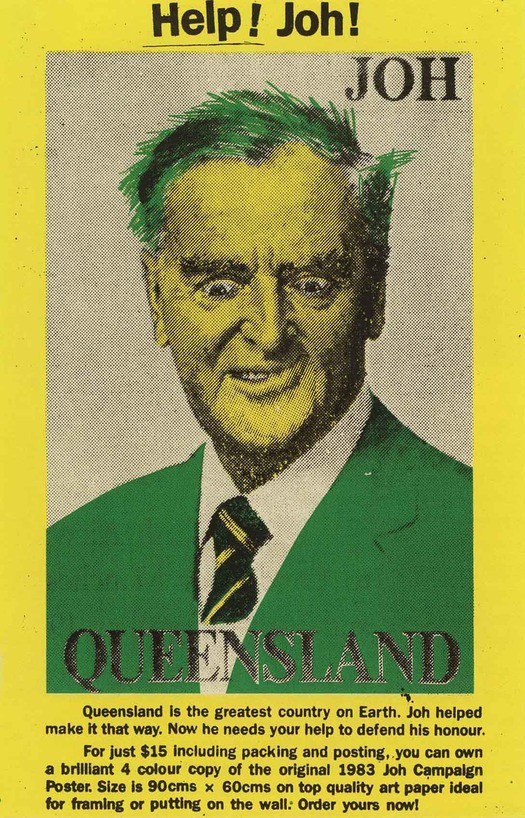
The screen-printed poster phase of the 90s in Northern Australia was not entirely a developed aesthetic movement, rather a political movement. Poynor (2013) describes in his piece, these posters were “street first” (Poynor, 2013, p.8). and not interested in economic success but instead political progress. In one of Stannard’s most famous posters, “Help Joh” (Stannard, 2013), this is clearly evident. Every single facet of the poster, in some way or form, revolve back around to Stannard’s determination of political critique. The piece is a satirical take on the typical politician campaign advertisement. It was Stannard’s method of essentially making a total public mockery of the then widely criticized Queensland Premier Joh Bjelke-Petersen. The posters features a portrait of Bjelke-Petersen defaced with a stupendous expression, overhead in the border of the poster the title reads: “Help! Joh!” (Stannard, 2013) The sub-text below reads “Queensland is the greatest country on earth. Joh helped make it that way. Now he needs your help to defend his honour.” (Stannard, 2013)  It is a humorous and ironic statement when you take into account the context of the time and place of Queensland in the 1990s. As previously mentioned, the authoritarian Bjelke-Petersen had an overtly strict rule over Queensland, so much so, that Poynor (2013) describes Queensland as “as many as 25 years behind the rest of Australia” (Poynor, 2013, p. 7). So By calling Queensland the greatest country on earth is not only to make a mockery of the intelligence of Bjelke-Petersen and his followers, but furthermore to highlight the complete isolation that Queensland, both in societal and political matters, had in comparison to the rest of Australia. Stannard really emphasizes his sole blame on Bjelke-Petersen in the sharp statement “Joh made it that way” (Stannard, 2013). And by Stannard calling Bjelke-Petersen’s misplaced legacy as an “honour” (Stannard, 2013) he titles the political and societal decimation that the premier had on the state. The text below ironically calling the print a “campaign poster” (Stannard, 2013) and the advertising of buying your own copies is another satirical take on the misplaced over-patriotism. The aesthetic of the poster is at least on the surface unassuming and simple, yet with further inspection it is clear that it is, like the rest of the print, fiercely politically motivated. This satirical over-patriotic tone is also seen in the posters in the iconic Australian green and gold colour. The colours are bright and pop-style like so many other Inkahoots posters. This bright pop-style colour is easier to understand when you place it in context of this “urban gallery” (Poynor, 2013, p. 8) of Brisbane that as Stannard recounted. Stannard understands this “street first” (Poynor, 2013, p. 8) motif behind these posters. This poster would have to fiercely stand out from the rest of the identically bright and colourful posters that would surround it. Yes, this poster is a work of art by Stannard but most importantly it is a scream for political change in Queensland. The bright colours are not to draw the eyes of the Brisbane streets into marveling over an aesthetic spectacle but instead to let Stannard’s political and societal concerns be known. 

Unlike the rest of the prospering Australia, Queensland was recovering from an authoritarian era of then premier Bjelke-Petersen which stunted Queensland’s political movement and furthermore societal identity. This poster, like all produced by Stannard, weren’t pretty pieces of artworks to be sold, they were instigators and catalysts. The posters weren’t in exhibitions, they were created to be displayed to the people of Brisbane in the streets. Stannard’s posters were a display of passion, created to shake Queensland from being dormant in societal, artistic and political growth. And although Stannard is a forgotten hero and will not go down in the history books as one of the most skillful artist of Australia, his impact on the political landscape of Queensland will linger forever.

References

Chris Stannard, 1991, Help! Joh! by Inkahoots, screen-print,     https://designobserver.com/media/images/Inkahoots1_525.jpg

Rick Poynor, 6.26.2013, Inkahoots and Socially Concerned Design: Part 1,  Essays Design Observer, 1,

        5-8

Why Was Anni Albers Less Celebrated Than Her Male Bauhaus Counterparts?


The Bauhaus School was created with the idea of combining arts and craft, design and architecture into an eventual single field and is often credited with having a huge impact on modernism across many disciplines.

But among those studying and teaching at the Bauhaus, certain people are more commonly accredited than others, despite the certain works and their impacts on the standards of commonly practised design, the female creators of such works have often been overshadowed by the works created by the equally talented, yet male, designers at Bauhaus.

Anni Albers joined Bauhaus in 1922 along with future husband Josef Albers. Anni, who had previously trained as a painter under Martin Brandenburg, has said that she began doubting her skills when male artist Oskar Kokoschka bluntly asked her “Why do you paint?”.

Anni sought to learn glasswork and painting at the Bauhaus, but was declined, as Bauhaus prohibited women from attending most of their workshops at the time. Josef Albers however, quickly became recognised as a master within his own practice.[1] Anni was instead forced to enter the Weaving workshop, which was viewed as a feminine skill. But Anni embraced her position as a weaver and began creating works that impressed many at the Bauhaus, eventually earning her the position of head of the weaving studio in 1931, making her one of the first female designers to hold a position of power at the school.

Anni’s work whilst at the Bauhaus was not only challenging to the Bauhaus status quo, but it challenged many ideas that connected weaving to a craft rather than art or design.

Anni is quoted as saying “to let threads…find a form themselves to no other end than their own orchestration, not to be sat on, walked on, only to be looked at.”[2]

She was implying that just because weaving was traditionally used as a means to create practical or decorative household ephemera, the combination of threads could ascend into something more.

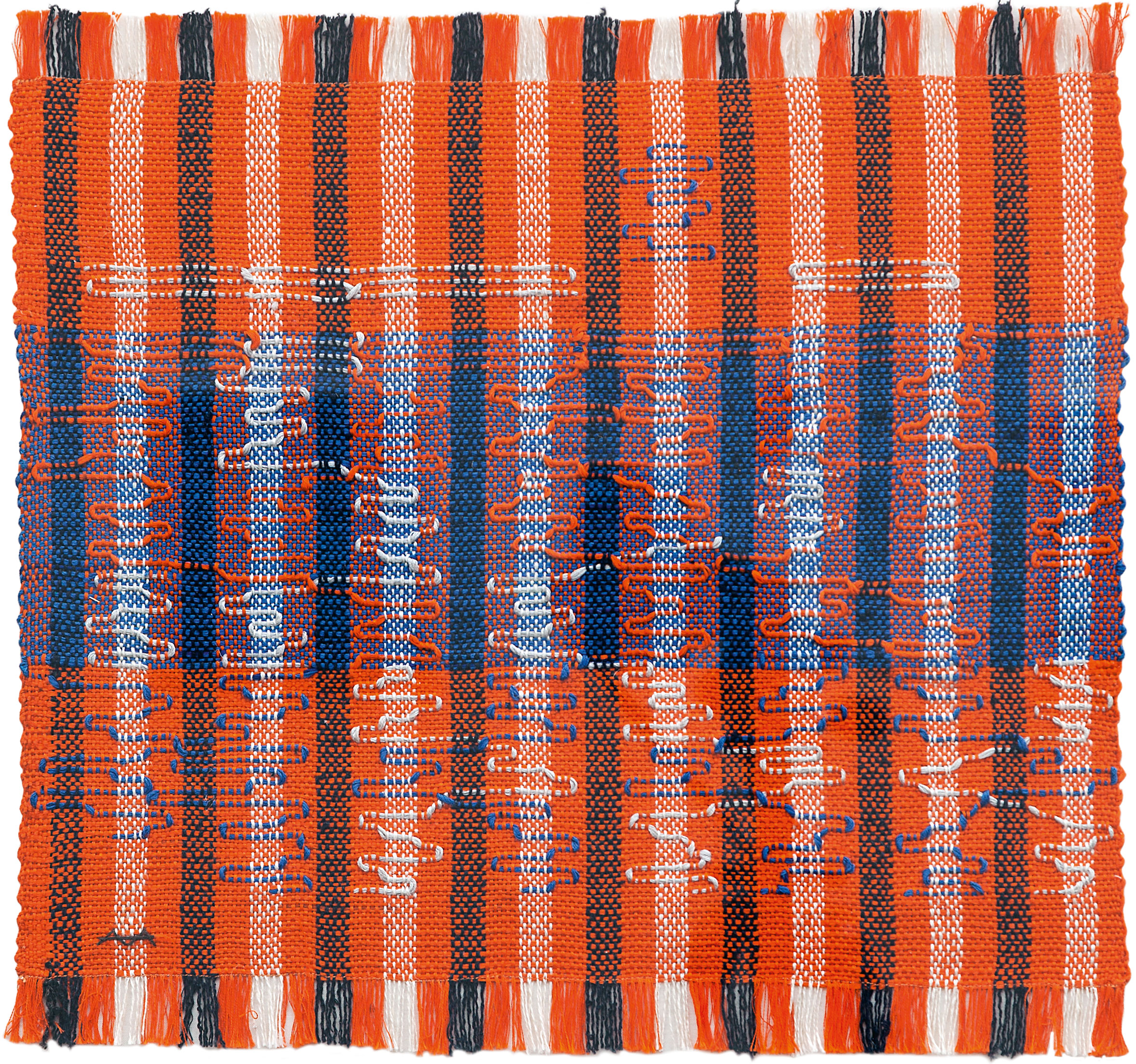
Intersecting by Anni Albers, 1962 [3]

This idea can be seen perhaps most strongly in her work ‘Intersecting’ from 1962, long after the Bauhaus was forced to close by the Nazi Regime. The work’s impact is in its use of colour, form, texture and movement. It is also jarring to see a work of weaving that was produced not with the idea of symmetry in mind, but rather, breaking that tradition form with a flowing sinuous line that is leading the eye all over the piece. It is also interesting to note the use of weaving own medium to break itself, rather than introducing a new element, Albers has used thread as the method by which to break the understanding of what a woven textile should be, or appear to be.

And yet this piece retains its usability. It would fit into many modern homes as a rug or wall hanging, but also as a respectable piece of art that questions itself.

It is interesting to think that Albers was barred from pursuing a male oriented design workshop due to the rules of the establishment, and yet she has created work that weaves lines between many areas of design using this weaving workshop as her foundation. This is perhaps one of the most successful examples of Bauhaus’s original raison d’etre, adding painterly qualities into textiles and giving them a new realm to exist within. Albers has been quoted as saying that originally she thought weaving was ‘Sissy’. Perhaps the ideas of the time in regard to gender roles were so ingrained that even the women of Bauhaus shied away from things traditionally seen as women’s work because of the power and importance associated with male dominated fields like architecture. But Albers has proven that power can be associated to any field, and any field can be changed and manipulated regardless of gender association.

While Bauhaus began as a ‘boys club’, it eventually was beginning to recognise its own female talent, unfortunately this was cut short by the Nazi Regime in 1933, and the strides that female artists within the Bauhaus hierarchy were making were cut short. Perhaps if the Bauhaus had remained open, it may have been able to develop into an establishment that could have lead the way for similar institutions of the time in establishing a female presence in the design world of modernism. The skills of many female artists within Bauhaus has forced the male staff to take notice.

For instance Marianne Brandt, in recognition of her talent, was given a space in the metalwork workshop, which was a workshop strictly reserved for men, and in 1928 she even rose to become the head of the department.[4]

Unfortunately the design field has been strewn with similar incidents of gender identity impacting the distribution of work and while no longer forbidden, there is still a skewed instance of female students studying traditionally male design area.

fig.1

The article ‘Women Designers Is There A Gender Trap?’ by Margaret Bruce and Jenny Lewis aims to understand this trend, even 50 years after the closing of the Bauhaus. It can be seen from the above graph from this article that female students are not studying areas like Industrial design, whereas areas like graphic design have a fairly even distribution.[5]

Bruce explains that perhaps this can be boiled down to female students being faced with the idea that women should not be doing certain things. Not just from men but also women who have grown up believing certain ideas about gender, the pressure of fighting against those forces from every angle is just too great and it is easier to shy away from something that people will actively try to dissuade you from pursuing.

It is noted also in the article that the design fields seen as traditionally female disciplines should not be disparaged or seen as less important, but re-evaluated. This ties in perfectly with the way Anni Albers tackled the art of Weaving, not just as an area of work designated for women, but as a way to break boundaries and elevate the benign.

[1] accessed on 05/04/2019, https://albersfoundation.org/artists/biographies/

[2] Dominic Lutyens, ‘Anni Albers And The Forgotten Women Of The Bauhaus’, 2018, accessed on 05/04/2019, http://www.bbc.com/culture/story/20180919-anni-albers-and-the-forgotten-women-of-the-bauhaus

[3] Image accessed on 05/04, https://www.tabletmag.com/wp-content/uploads/2018/12/Anni-Albers-Intersecting-1962.-X64702.jpg

[4] Lou Stoppard, ‘Why the fearless women of the Bauhaus are the forgotten trailblazers of art history’, Jan 2019, https://www.sleek-mag.com/article/bauhaus-women/

[5] Margaret Bruce, Jenny Lewis, ‘Women designers is there a gender trap?’, April 1990

fig.1, Screenshot from ‘Women designers is there a gender trap?’

Callum Douglas – 28830644 – topic 3: forgotten superheroes of design

Is sponsorship benign?

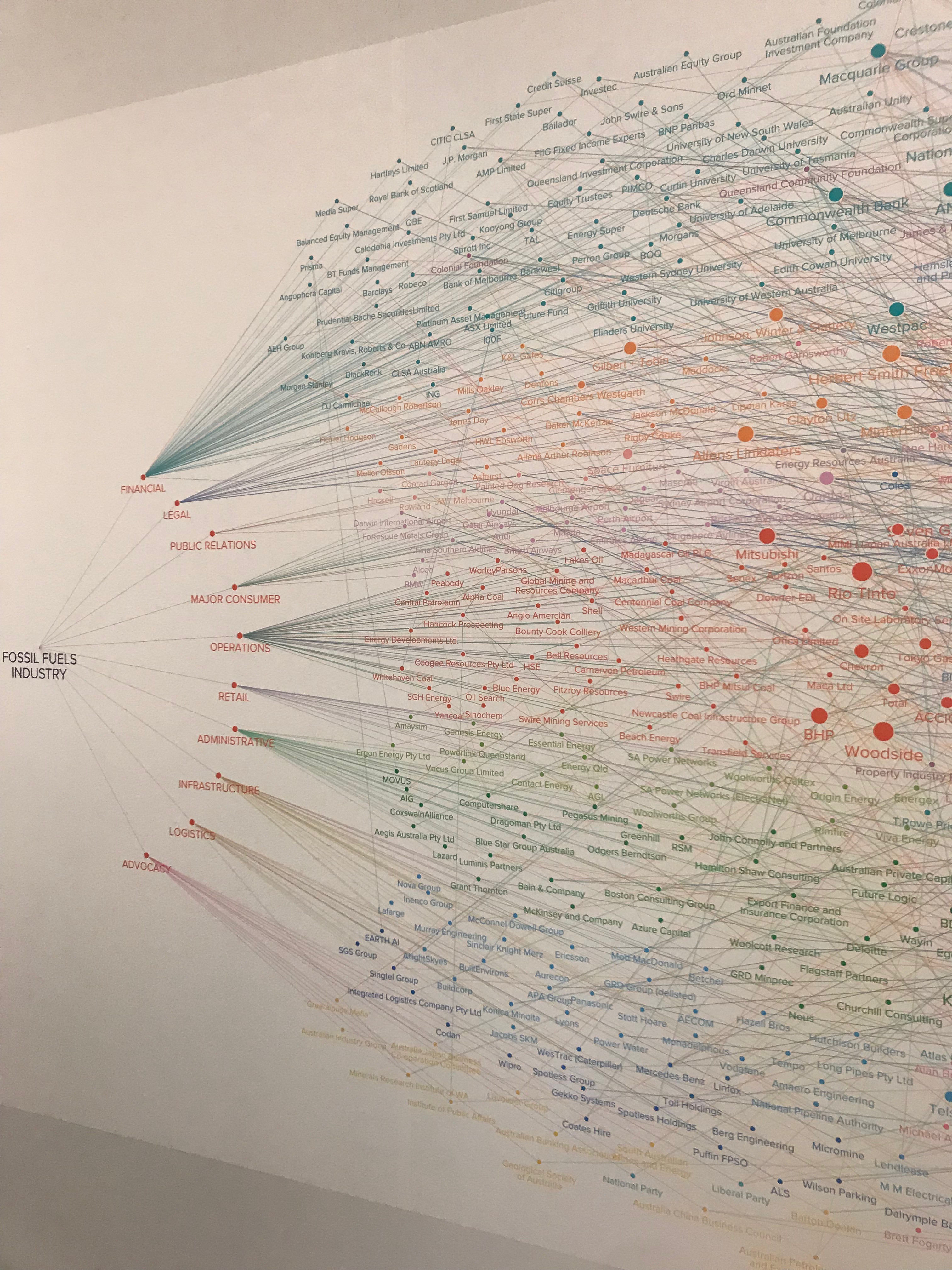
With the current day mass medias there are may “free” online services which can be used how do these “free” services gain a revenue and keep up their services? Sponsorship, sponsorship or advertising is not a new thing when the arts and entertainment industry is involved, dating all the way back to the medieval times were patrons and sponsors to the arts who would provide support for artists and creators in their endeavors whether that being theater, painting and so on. In modern society a huge amount of entertainment and art has entered the digital realm, this has made sponsorship easier than ever to acquire and to give out opening a entirely new world of ways to sponsor as well. However no one likes to see ads pop-up on their screen and sometime the ads can be for companies which are not entirely ethical, which raises the question should creates turn down sponsorship because the sponsor is working unethically? Currently in the MUMA gallery there is a piece named Fossil fuels + the Arts (2019), interactive network map, courtesy of A Centre for Everything by
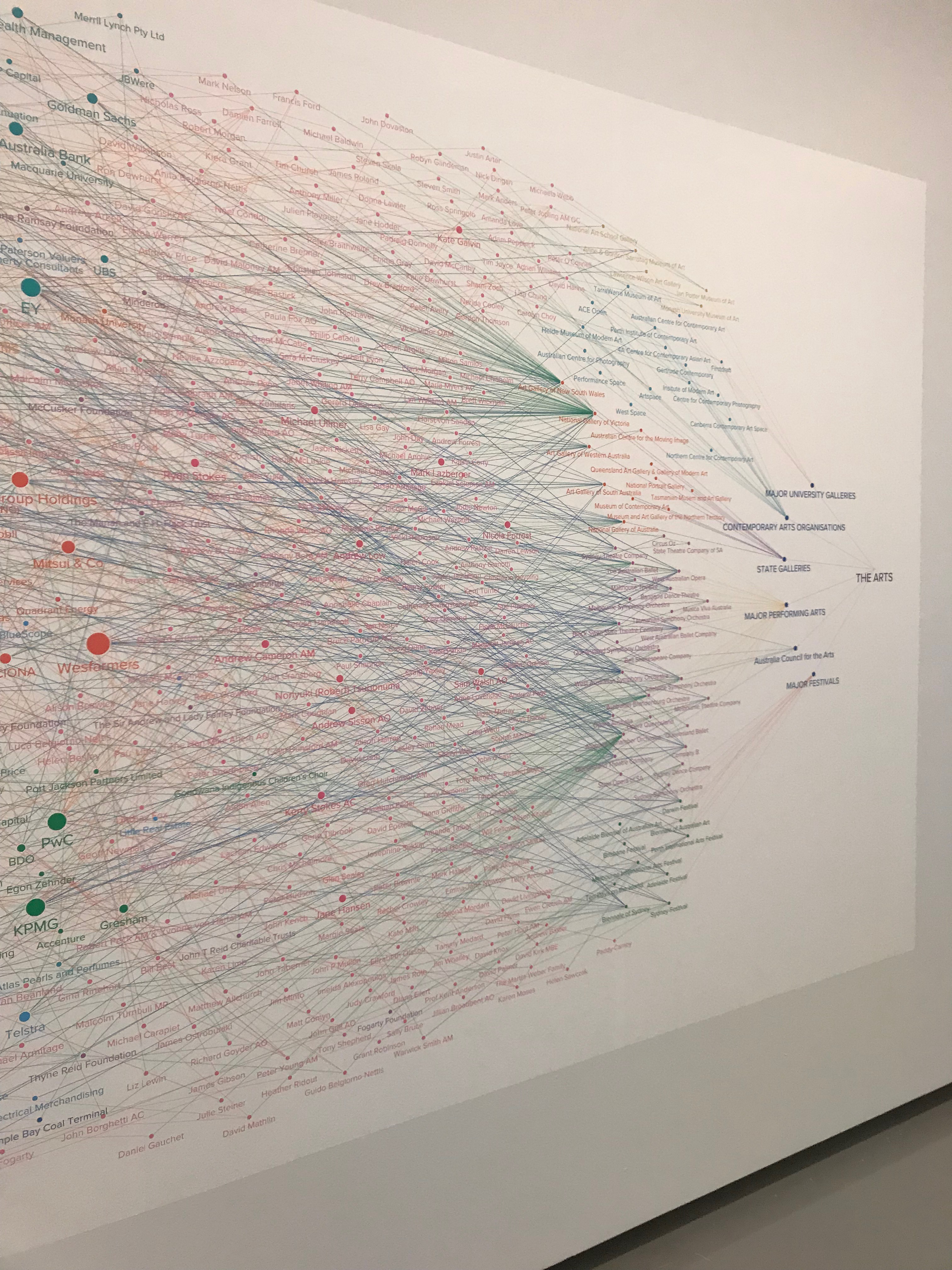
Gabrielle de Vietri and Will Foster [1] which explores the connections of modern Australian art galleries and the big mining operations and companies and links them via gigantic network displaying all the intermediaries and associations.

A interactive audio section goes into further detail and empathizes how closely coal mining is interlinked with our national art galleries and how these galleries are using the good will these organisations garner as a shield from complaints about their practices.

Via the lines in the creating a entangled, hard to follow web of points and paths it shows just how closely entwined the major art galleries are with support from the coal industry, using larger dots to draw attention to hubs of connections such as Wesfarmers or Rio Tinto also further shows just how much of an influence these companies have. This piece calls the viewers to action both as a piece being displayed at a gallery in a art and design focused university area, calling for those students to say no to displaying art in galleries backed by those organisations as well as beckoning galleries themselves to extricate themselves from their relations with these industries.

On a smaller scale the same can be seen online with popular sites such as Facebook, YouTube and Twitch as a few examples in all of the listed sites ads are unavoidable (unless you have add-ons to avoid them) showing ads during at the beginning and even during use, Twitch is an interesting case in this as while there is a compulsory ad when a viewer joins a live-stream further ads are up to the creator on when to display them which one creator Disguised Toast has described as a “Golden Goose”, squeeze it and it lays an egg but squeeze it too much and there are consequences [2], further on in the video Disguised Toast talks about how he would pick and choose which games he would let sponsor him, choosing between games which provided him varying amounts of money, some games which may of offered him more money however were badly made cash grab and a boring experience were turned down by him because as a person who can influence his viewer what he plays can impress upon the viewers and if he praises the game (which a lot of the time he is contractually obligated to do when he accepts a sponsorship) it would cause the viewers to spend money or time in something which they may not enjoy. While not as malignant as the coal industry they still use the same idea where they use a respected or well liked entity to promote their unethical operations.

So that brings us to the question should creators, artists, people of influence accept sponsorship? In my view sponsorship is like food it is what feeds the creators and is necessary to some degree for then to survive and keep on creating. However there is junk food, easy, lucrative and maybe a bit greasy. This is what i feel that creators should avoid and while maybe hard to part from junk food if you have lived your life consuming it, (much like how the galleries themselves we founded and have lived upon the funding by the large coal mining companies) makes it very hard to part form it.

[1] http://www.acentreforeverything.com/maps-of-gratitude

[2] https://www.youtube.com/watch?v=6m5P_n5njCQ

Sample Blog


Women and design

With the influence from the patriarchal society, women were devalued and their voices could not be heard. As well as in the design world, women have been involved in it in a variety of ways – as practitioner, theorists, consumers, historians, and as objects of representation. However, throughout the design history, the value of female designers or their work was not recognized. [1] Since 1970s, female graphic design graduates have consistently comprised over 50 per cent of the total number of graphic design graduates. But only not long ago, the Australian Graphic Design Association’s (AGDA) hall of fame has included the only one woman, Dahi Collings (1909-1988), with the inclusion of Alison Forbes (1933-) later in 2016 [2]. Although gender equality and feminism is growing in today’s society, there is a ways to go to remove the impact from the past.

Screen Shot 2018-04-14 at 5.25.25 am


F*EMS is a space based in Melbourne for female and woman-aligned people to express themselves by submitting to their tri-annual zine. They also organize events to create a platform for women, to have their voices heard. [3] F*EMS zine takes illustrations, artworks, photos and articles done by women to showcase talents, express emotions and celebrate achievements.


The cover design of each issue of the zine is very different. There is no consistency or themed formula of each cover. There are covers with hand drawn artwork, hand painted illustration, digital illustration, photograph as well as crafty work like embroidery. The wide range use of medium used in the covers of the zines is well matching F*EMS aim of being as inclusive and accessible as possible. The inclusiveness of all mediums of artwork is suggesting that the world should be an inclusive place where everyone, more so females in this society, should be included, heard and valued in every aspect of life.

fems-cover-final-crop_1600_c

In the Issue 10 of F*EMS Zine, the cover design is crafty, fun and childlike. The background is roughly painted with earthy and pinky colours. Several coloured lines of stitches freely placed on the page. “F*EMS” and “ISSUE 10” is loosely written in black ink along with a few small doodles across the page. Interestingly, sewing or stitching was once only women’s job and the crafty side of design was then of course considered the stereotype for female designers, such as textile design, and they were not valued as important as “male’s design” such as industrial design. [4] F*EMS Zine uses the stitching element here to perhaps readdress this issue from the past as well as to celebrate the different methods and approaches of design.


Similar to F*EMS, Gusher is another magazine that is created entirely by women and genderqueer creatives, which creates a platform for female designers to be seen. It is an annual print magazine about rock music. Its existence is to carve out a space in the male-dominated rock music industry for an “intelligent, creative and inclusive” place about rock, punk and indie. [5]


The overall design is quite modern and vibrant with a touch of old-school vibe. Two issues were published so far and they seem well themed and matched. The vibrant, colorful pages suggest the inclusion and understanding of all, including genders, where women are no longer only associated with pink or other softer colours. The title “Gusher” on its cover is interestingly designed. Large, bold “Gusher” in red with a pink “Gusher” layer behind it. The pink to red symbolizes that we are slowly moving away from the gender inequality from the past, yet still got a ways to go to achieve gender equality. The bold and red text on top suggests their strong belief in the future, the future where all is equal. From photographs, illustrations to written content, everything about this zine is to showcase and celebrate women in not only the design industry, but also the music industry and the whole world.


Both “F*EMS” and “Gusher” are playing important roles in the present of feminism and gender equality. Although we still have a long way to go as a society, female designers, as well as women in other industries are now more celebrated than ever thanks to the forward thinking people and our growing and accepting society!


  1. Cheryl Buckley, “Made in Patriarchy: Toward a Feminist Analysis of Women and Design”.
  2. Jane Connory, “Plotting the Historical Pipeline of Women in Graphic Design”
  3. About F*EMS, accessed on April 12th 2018  http://www.femszine.com/About
  1. Cheryl Buckley, “Made in Patriarchy: Toward a Feminist Analysis of     Women and Design”.
  2. About Gusher Magazine, accessed on April 12th 2018

http://www.gushermagazine.com/about-1/