Designer, magician of emotion. The difference between designers and engineers or pattern makers is designers are good at transferring emotion and personality to their design, let their woks have temperature and have stories can tell to the users and audiences. In other words, designer make intangible feelings present in a sensed way. Compare with engineers and pattern makers, they focus on the function, solve the physical problem and translate designer’s idea to reality.
The feeling of emotion, depends on a very wide levels, such us personal experiences and cultural backgrounds. We can not find a person, who has the exactly same life experience with us, everyone may have different feeling and comments of the designs. How designers can design their works to let people empathetic?

“Devlin was devising her own great (Oliver award-winning) white box- a revolving cubic stage design for Lucy Kirkwood’s Chimerica of 2013”. [1] The stage was design for Lyndsey Tuner, the director of the drama. “This is a thoughtful, complex portrait of New York photojournalist Joe Schofield’s search for the subject of his most iconic picture: a lone Chinese protestor who stood in front of a column of tanks in Tiananmen Square on June 5 1989. Here, Chimerica is a fragile web of shifting human relationships, which are sometimes severed by corporate greed, state cruelty, or individual selfishness, but achieve moments of connection which transcend their inhospitable environment”.[2]
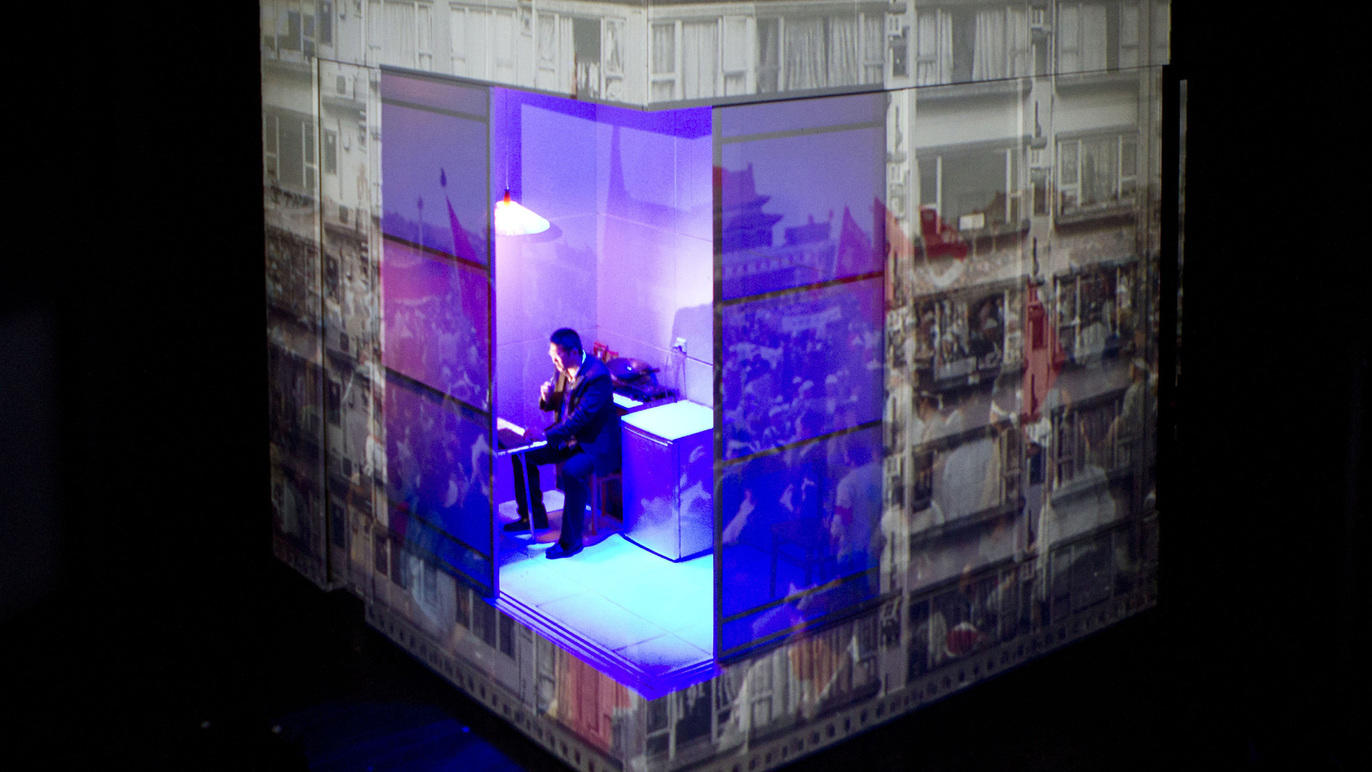
Delvin, as a British set designer, how did she present the two big countries’ interaction and contradiction that she did not have much personal experience of these countries, and how she translate the photojournalist’s feeling and emotion in his photos to three dimensions stage? “We cannot have a reductive theory of design’s totality or its specific sign functions if we are to understand its multiple forms. In the geography of design, where meaning shifts by movement and conjuncture, there is no essence outside of a logocentric view”.[3] We can not form ourself in a confined space or comfort zone to design, especially when the inspiration and way of telling the story we want is different to our experience and background.
In the design of Lucy Kirkwood’s Chimerica, Delvin was combining scenes taking place in both countries through a cleverly devised box that rotates as video projections and photographs are cast on to its sides. We can see is not only a rotating white cube displaying photographs, but also presenting the photojournalist’s emotion of contradiction and shock by overlaying and changing the transparency of the photographs across the show. The aim is to make the audiences have entire new visual and thinking stimulation through the rotate of the cube.
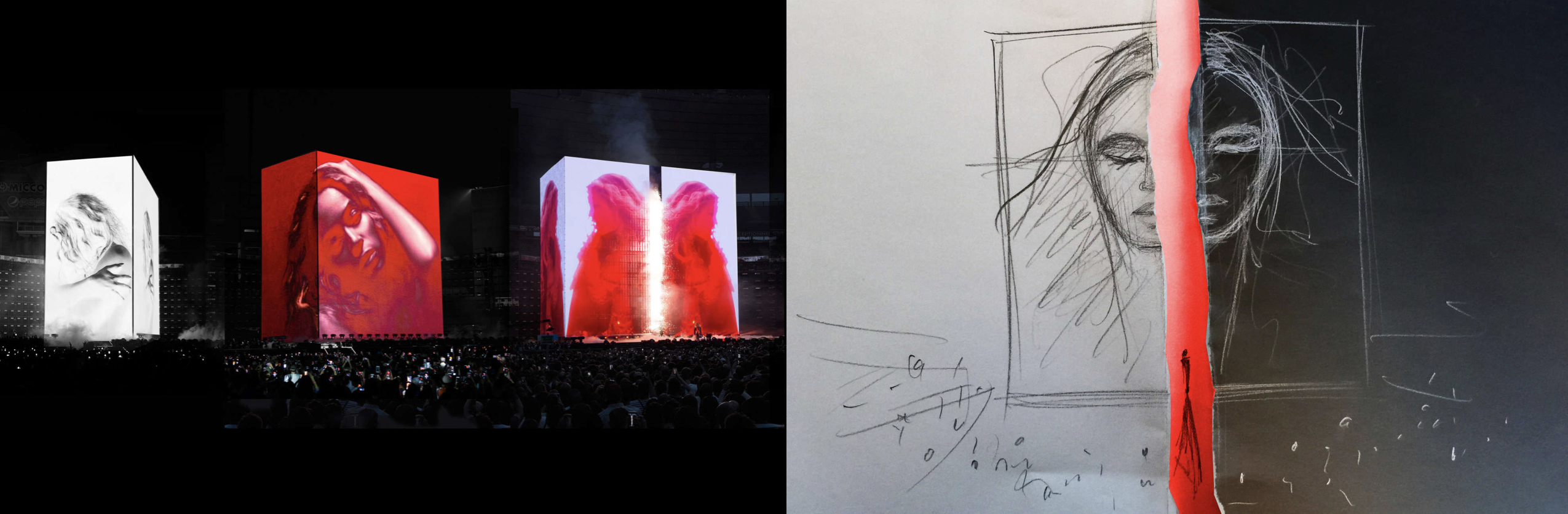
The main structure of most Delvin’s designs is playing around with the geometric shape, such as the stage designed for Beyonce’s 2015 Formation Tour. Similar with the stage of Lucy Kirkwood’s Chimerica, it is a rotatable cube, but larger scale and more complex elements. During the concert, audiences feel exciting when the form and the angle of the cube is keep changing. For example, the cube can separate to two parts, so in the third part of the. concert, Beyonce walks out from the cube, and the collocation with dazzling lights, which is the audiences can not expect.
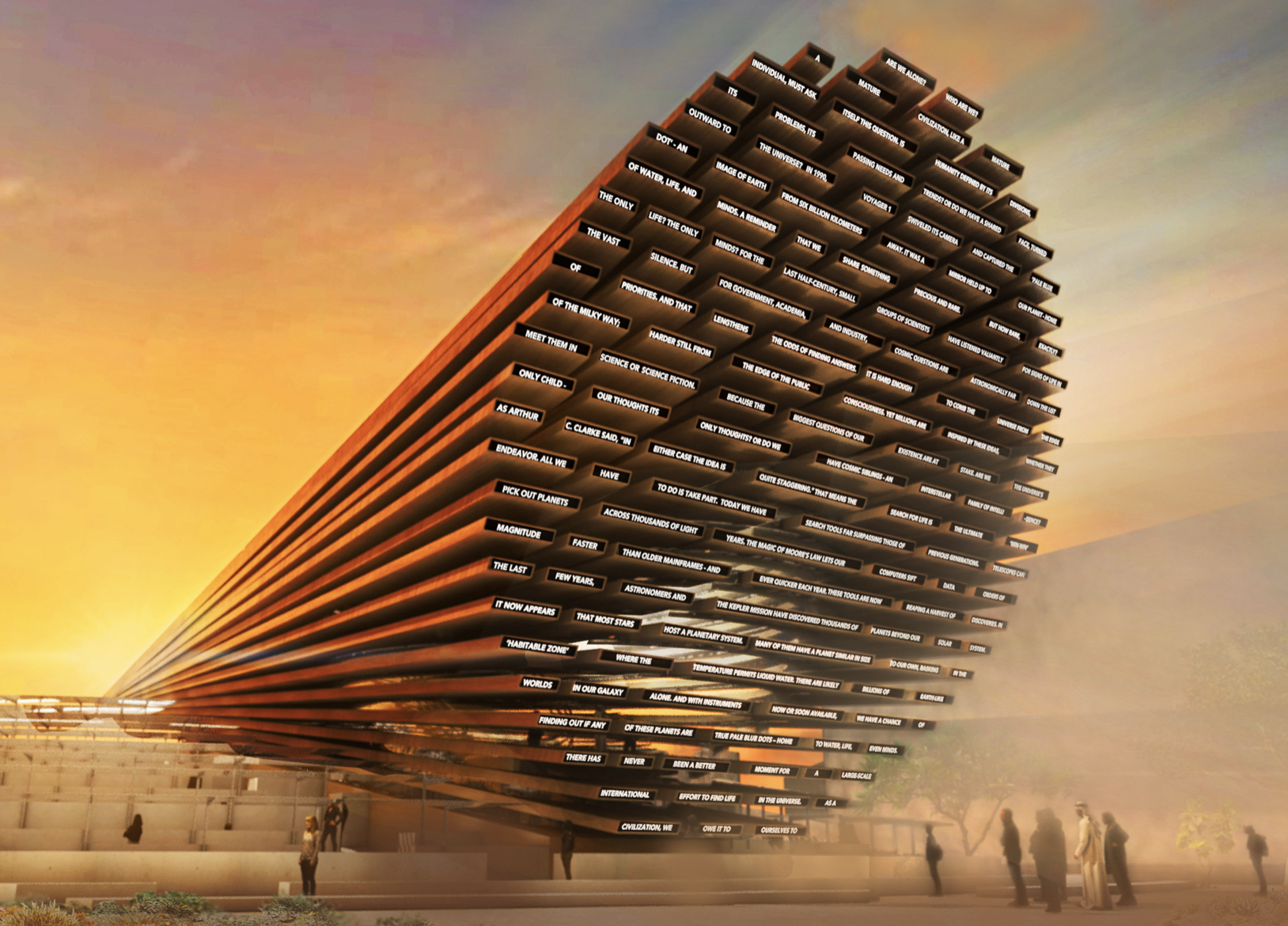
From these designs of Delvin, we can strongly feel her personality and how deep she researched her clients. She did not framed by her background like where she born and where she grew up. She make people see her talent first, then people would like to explore her background to figure out what life experience she had to support her became a good designer.“Marginality is being on the edge or outside of the relations of exchange, no matter where they are located, on what scale they might be, or who or what is powering the activity.”[4] No matter where you from, where you live, if you got talent, then all you have to think of is how to express your designs to the world, just like Delvin. But we can still say Delvin is a ‘forgotten hero’ because she born in Europe, the central of the world trend culture, where grows more talented designers and artists compare with other continents in the world, so it is really hard to be seen in that area. After designed numbers of stage for drama, fashion shows and concerts, she started design architecture like she has been chosen to create the UK Pavilion at the Dubai Expo 2020, with a performative structure that will use artificial intelligence to write poems.
In conclusion, interdisciplinary design is the trend to simulate new design thinking and idea, and designers can combine their profession and express their emotion by different ways.
[1]Libby Sellers, Women Design
[2] Caroline McGinn, Chimerica. Accessed April 2 2019
https://www.timeout.com/london/theatre/chimerica
[3][4] Tony Fry, A Geography of Power: Design History and Marginality

 Design Ideas
Chimerica is used to describe the relationship between China and the United States. The play not only discusses the political relationship between the two countries, but also examines the pollution, censorship, modernization and other problems facing China. Performed more than 40 set in two different countries, in order to meet the rapid change scene and the present situation, stage designer Es Devlin can propose a rotating cube, all around the area of space by cube and all kinds of image projection, the two-sided of title to represent the plays, but also reflect Chimerica – the biggest subject of globalization. The use of stage space is considered by many critics to have added scores to the overall play. Her work is not limited to modern drama, but also extends the opera, dance, film, television, and the concert, she also repeatedly as a rock, rap music performance art director, work often use many image design in great quantities, the 2012 London Olympic Games closing ceremony of the stage design also have her footprint of participation, and from time to time and also do the clothing design. Between the 1980s and 1990s, the front row seats in the upper circle were available for 5 for season tickets purchased in advance, this convenience make a talented stage designer. The promotion of performing arts education in Taiwan has also promoted a large number of cheap tickets in schools, but it seems a little difficult to cultivate design talents such as Es Devlin when the pressure of admission and the department of design are mostly ignored.
LikeLike