Female design practitioners have been in the shadows in design history and practice. The explanation as to this comes in many forms with the struggle against social order and gender expectations at the fore front. Breaking through the barriers is no easy feat for many women designers in their careers. An aspirational woman who has lead the way for female graphic designers in history is Alison Forbes. As one of Australia’s most awarded book designers Alison become the first full-time independent book designer in Australia[1]. With a body of work that is of quality and uniqueness Alison’s career mark in Australian design history is one to be celebrated.
Alison Forbes studied and graduated from Melbourne Tech (now RMIT) and launched her career which carried across more than five decades. While studying design and illustration one of Alison’s lecturers told her that she will “never make a living designing jackets”[2]. Designing not only jackets but complete books has been the portfolio of work that Alison has achieved in her career in publishing which has been her success.
The post-war period for publishing houses were quite different to what is known today. Alison describes that “quite often there was only one person in a publishing house”, with access to various resources being quite difficult and limited as “you couldn’t use italics much anywhere”[3]. The small numbers in these publishing houses also benefited the work produced as Alison was able to communicate with key decision makers in industry[4]. The involvement in the process strengthened the outcome as it became an integral part to Alison to receive insight and even liaise and access the author’s ideas of the publication she was designing. The financial reward that came with working for advertising agencies at the time were tempting for many designers. Despite this Alison focused on her body of work and remained solely on book design. The integrity of her work shines through as a result of this.
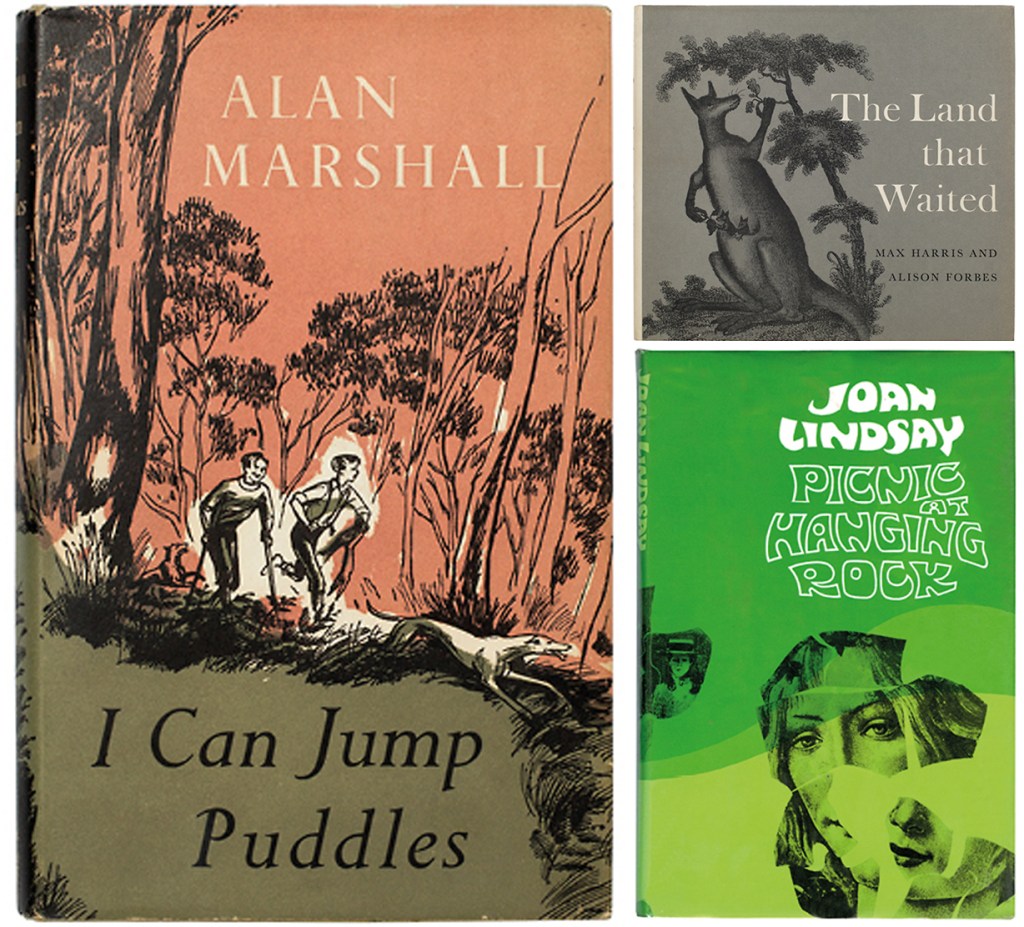
Alison’s first award in 1955 from the Australian Book Publishers Association (ABPA) Books of the Year was awarded for the design of Alan Marshall’s I Can Jump Puddles. The illustrations of the excited and curious young boys on the cover accompanied by their loyal companion evokes feelings of wonder and hope. The faded red and khaki green are used in harmony with the sketched black contrasting as well as the white. The colours speak of an Australian landscape with red outback dust and green nature coming together. The classic serif fonts tie well with the illustration seaming quite natural blending in with the leaves and grass in the image. Some of Alison’s other favourite and famous Australian designs include The Land that Waited and Picnic at Hanging Rock[5].
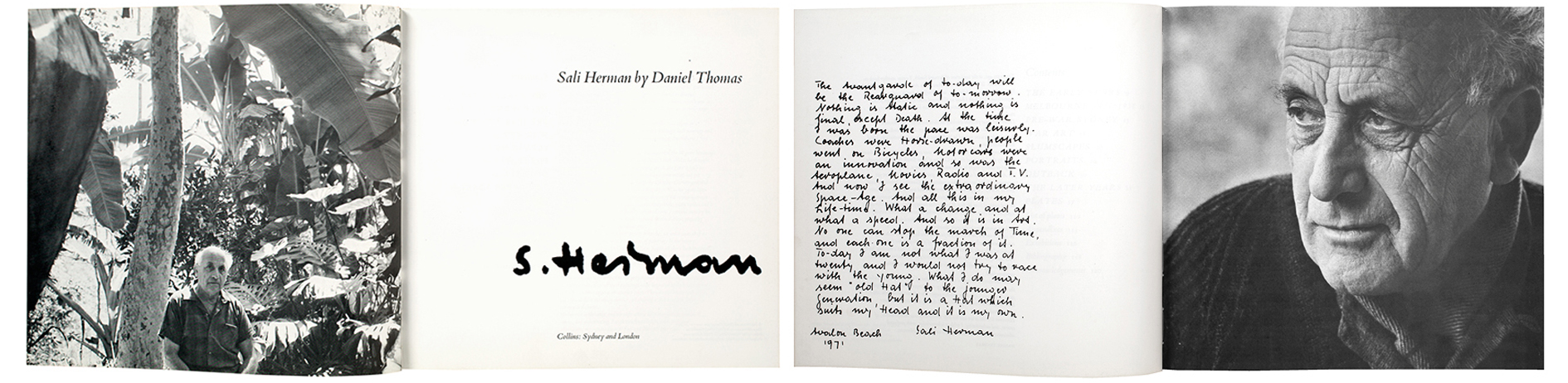
Designs exhibited by Alison are of significance today not only because she is a woman or because of her integrity in process, but because of her design talent. In 1971 Alison designed the book Sail Herman by Daniel Thomas. The design has modernist aspects with the use of white space and minimalistic typographic elements. The hand written type makes the feel of the book personal and links well with the black and white photography. Nostalgic feelings come from the design even as it is quite modern in its approach. By contrasting a typed serf font with the hand written bold signature, the book speaks of uniqueness to the man it is written about. Designs like these were a jump from the initial work Alison did upon graduation which involved “drawing happy housewives taking casseroles out of ovens”[6]. From starting off with tasks like so is coincidental as the gender stereotype that society is accustomed to was able to be challenged and overcome by Alison.
The
creative integrity held by Alison and her mark for female designers holds as a
relevant aspiration today. It is found that women have consistently comprised
over 50% of graphic design graduates since the 1970s however this does not
equate and reflect itself in the workforce[7].
With the barrier of social norm, women such as Alison have created their own
opportunities to mark presence in the design field and have affirmed that you
can make a living by designing. For recent graduates it is important to be in
tuned with the history of women in design as they have set the path for
success. Visibility of these women in history is needed to confirm that changes
are possible as we are steadily making progress towards removing social
barriers and gender based norms. Gaining insights into the successes and
failures of the processes that were undertaken may inspire a new generation of
female designers in industry.
[1] Jane Sullivan, “Turning Pages: The brilliant career of Alison Forbes, designer”, Entertainment, The Sydney Morning Herald, May 18, 2018, accessed April 4, 2019, https://www.smh.com.au/entertainment/books/turning-pages-the-brilliant-career-of-alison-forbes-designer-20180510-h0zx0a.html.
[2] Ibid
[3] Ibid
[4] AGDA, “Hall of Fame / Alison Forbes”, Australian Graphic Design Association, accessed April 4, 2019, https://www.agda.com.au/inspiration/hall-of-fame/alison-forbes/.
[5] Re:collection, “Alison Forbes”, Re:collection, accessed April 4, 2019, https://recollection.com.au/biographies/alison-forbes
[6] Ibid
[7] Jane Connory, “Plotting the Historical Pipeline of Women in Graphic Design”, dharn.org.au, 2017, accessed April 4, 2019, https://lms.monash.edu/pluginfile.php/8323632/mod_resource/content/1/Wk%209%20Plotting-the-Historical-Pipeline-of-Women-in-Graphic-Design_171117.pdf

 Design Ideas