Massimo Vignelli was graphic and product designer responsible for many iconic designs such as graphics and products for many “Italian and European companies including Olivetti, Penguin Books, Piccolo Teatro, Pirelli, Poltronova, Triennale, the Venice Biennale, and Xerox”[1] however one of his most famous designs was of the New York city train map which has elements which are still being used till today and can be seen even permeating into other cultures, Melbourne’s very own train and tram map can be seen to drawn heavy similarities and inspirations from Vignelli’s maps.
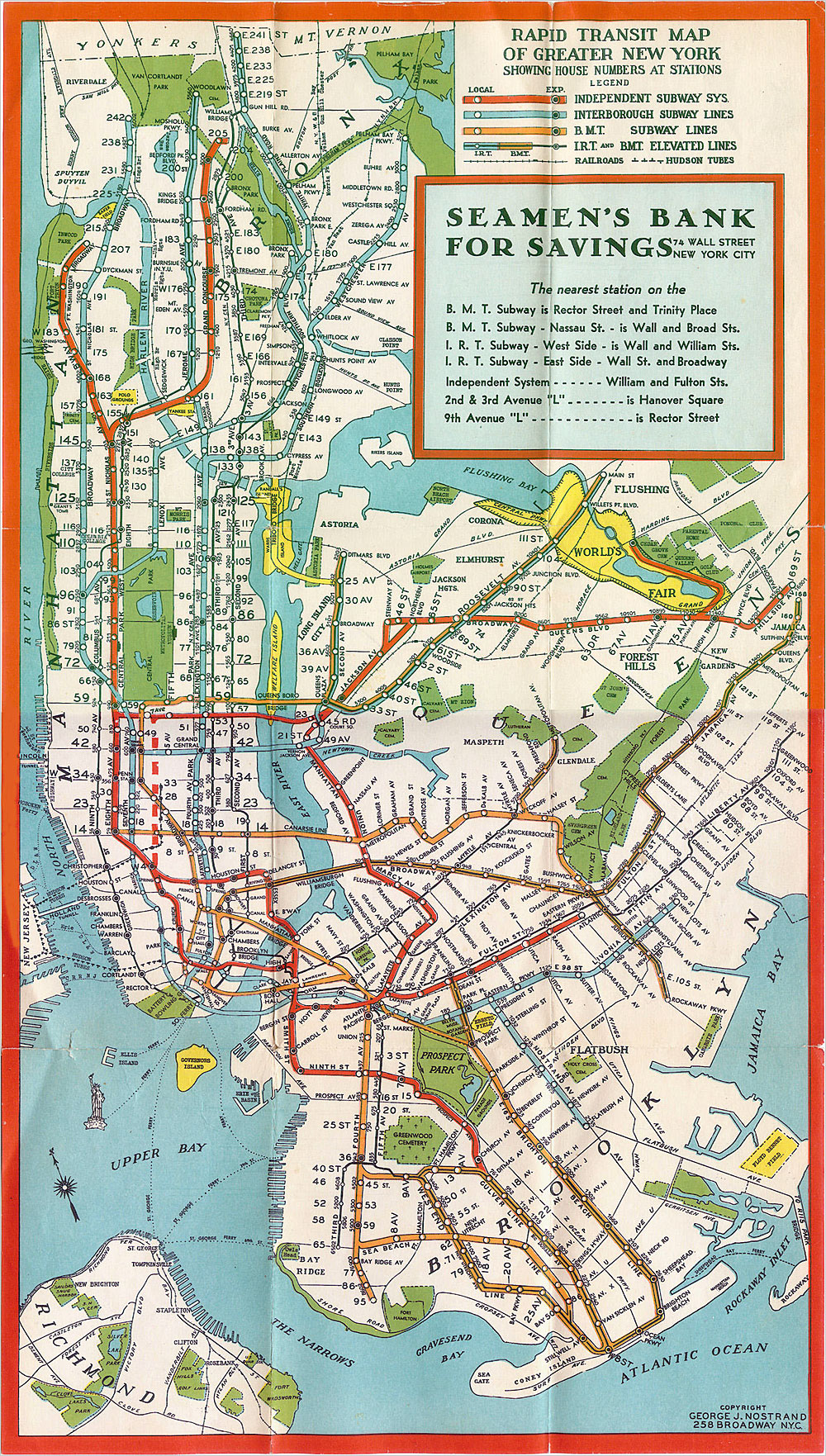
New York city’s old map 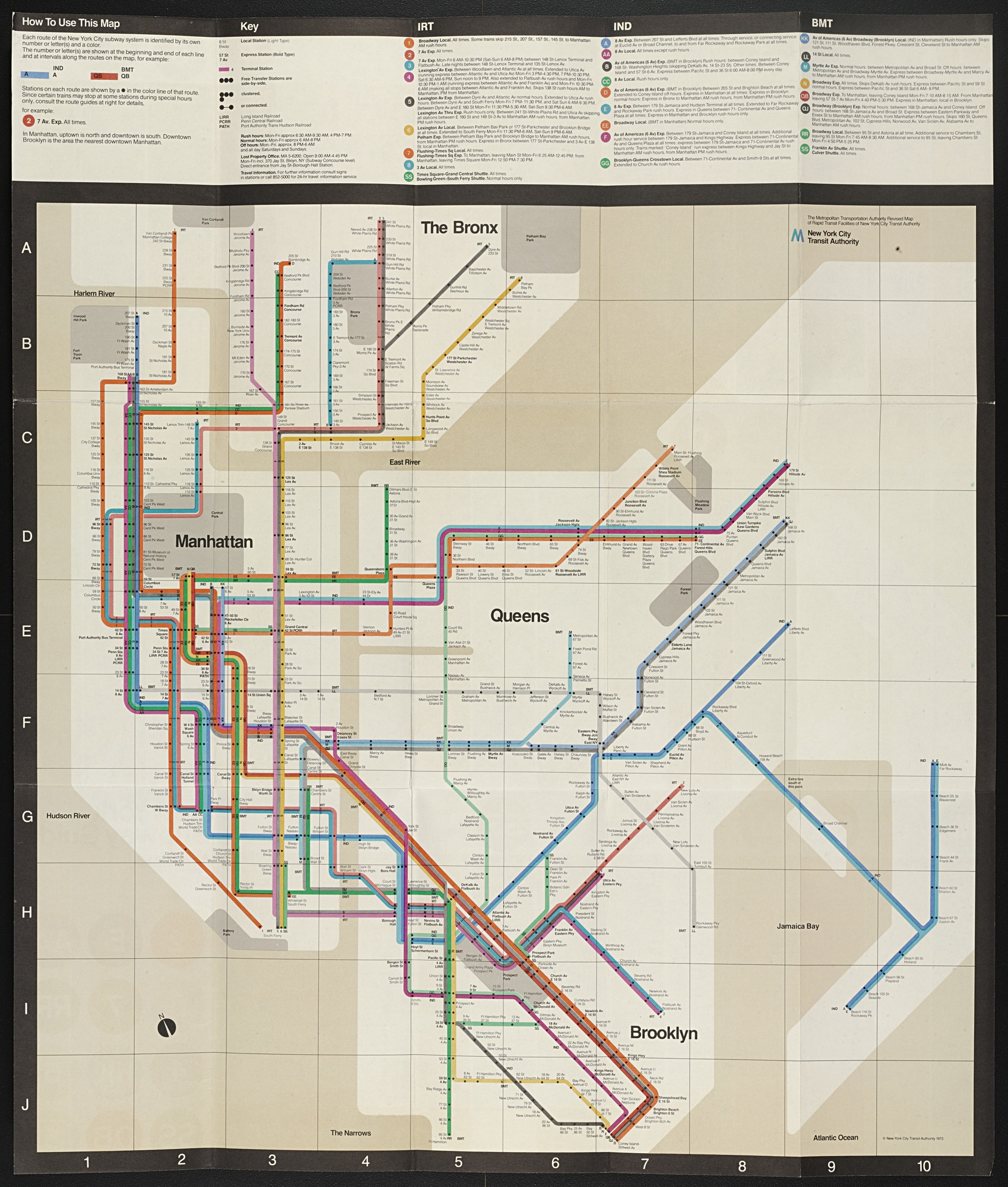
Vigelli’s New York city train map 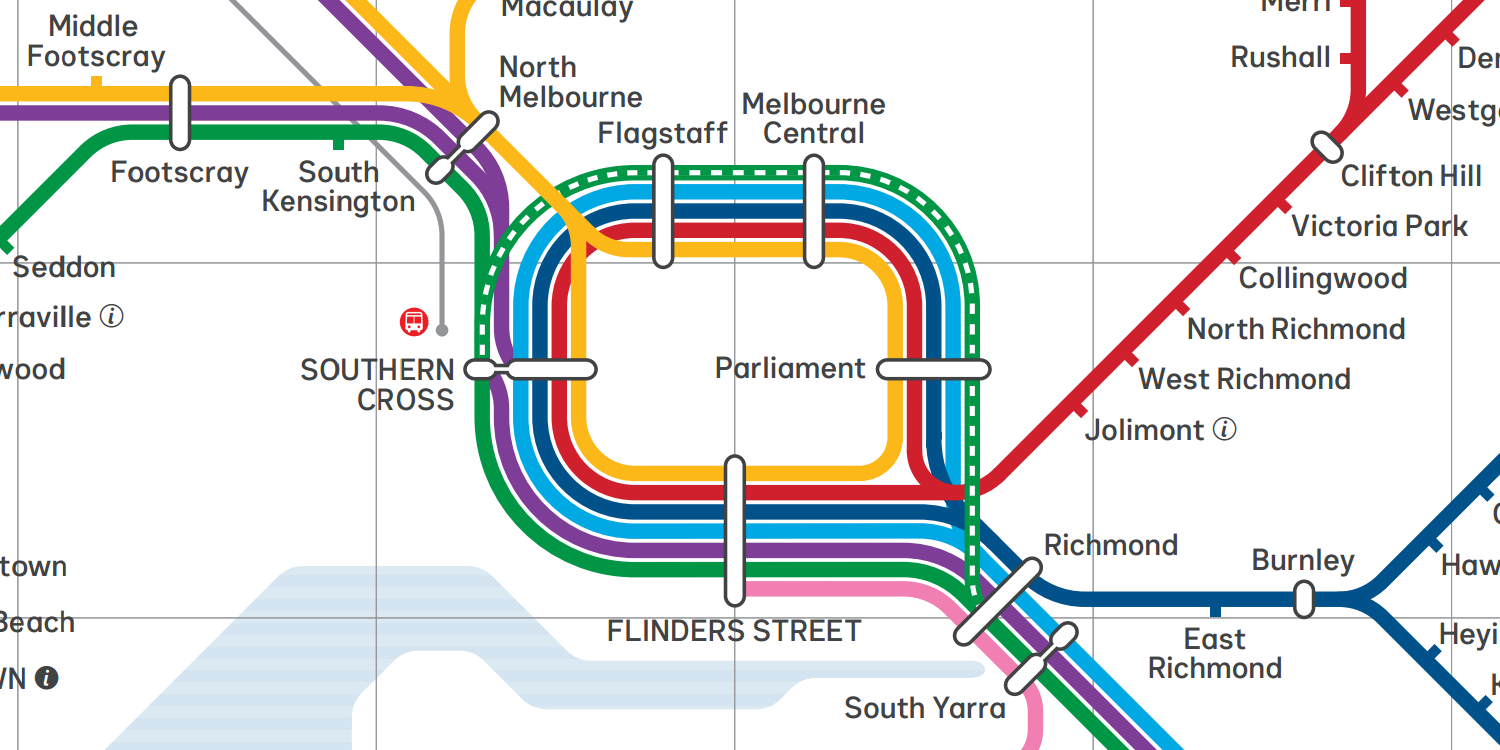
Melbourne’s train map
Vigelli’s design is now iconic among transportation maps, using the minimalist approach to designing the map while still retaining the spacial relativity of land marks and stations, the clean, simple and easy to understand design has allowed for easy planning as positions can be found quickly and effectively.
Massimo Vignelli was a firm believer of modernist principals his designs leaning upon the ideas of simplicity and geometric design, which can be seen in many of his works whether they be knives, maps or graphics he was of the leaders in spreading the ideas of mondernist design[2]. He is partially responsible for popularizing simple and clear typefaces, such as Helvetica which we can see being used both in his subway map design and many of his other designs use similar styles of typeface such as the bloomingdales bag which he designed.[3]

Criticism
As a person who introduced modernist elements to maps his designs are not without those who are opposed to them, in fact when the subway map was first introduced it was met with harsh resistance with people struggling with the idea of the slightly wonky geography and gray and tan blocks representing parks and bodies of water. Vignelli obviously refuted those claims ” Of course I know Central Park is rectangular and not square,” Mr. Vignelli said the other day, sitting at a green marble table in his studio on East 67th Street. “Of course I know the park is green, and not gray. Who cares? You want to go from Point A to Point B, period. The only thing you are interested in is the spaghetti.” [4]. However in the end the Metropolitan Transport Authority (MTA) eventually caved to the demands of those against the map and 7 years after it’s release was replaced by a new design by Tauranac which kept the colored lines and dotted stations but returned the lines to their “spaghetti state” which Vignelli comments
“Look what these barbarians have done,” he said as he examined his copy of the current map. “All these curves, all this whispering-in-the-ear of balloons. It’s half-naturalist and half-abstract. It’s a mongrel.”
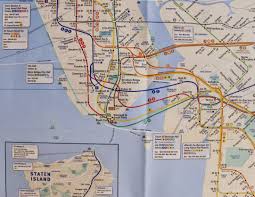
If i were to give my opinion, i would much rather prefer Vigelli’s design over Tauranac partially due to the fact that i am used to melbourne’s transport map, and also i am someone who enjoys the idea of form follows function and like the idea where maps are used to get from point A to B. However i can also see why his proposal was turned down when you look at the two maps and compare them you can see that there is large discrepancies in the placement of land marks, one of the most glaring examples of this is central park which has been squashed into a square not only falsely depicting it but also skewing the distance between landmarks where people who are unfamiliar with the city could be confused by the layout and get misled, this is due the fact that the map relies upon the users knowing the places where they are going meaning that people visiting new areas and tourist could be disorientated by this map.
[1] http://www.designculture.it/interview/massimo-vignelli.html#start
[2] https://www.nytimes.com/2014/05/28/business/massimo-vignelli-a-modernist-graphic-designer-dies-at-83.html
[3] http://www.valcasey.com/webdesign/typ.html
[4] https://www.nytimes.com/2006/09/03/nyregion/thecity/03maps.html?pagewanted=print&_r=0&module=inline

 Design Ideas
As a Chinese, the city I was born was too small for subways, but from all the cities i have visited in China that with subway train system, every of the cities all adopted Vigelli’s design concept —— different subway train lines are marked with bright different colours, simplified geometrical lines for directions, no over lapping of one and another. Although I have not been to NYC, as for one of the most influential city worldwide, I have been acknowledged that both cities were considered the most heavy populated cities, but shanghai has much more people than NYC. From my own experience I hardly had trouble going around with this simple but more functional map design in shanghai. To be honest, the first time I saw NYC’s subway map I was kind of shocked with this curvy, “messy”, map design. After I went online found out the reason why New Yorkers insisted on the “worse” design was because Vigelli’s diagrammatic map design completely distorted the geography of NYC, no one knows what’s stop close to the above-ground destination. Meanwhile also at that time, there was a significant crime rate in the last 70s, the New Yorkers were feeling extremely unsafe traveling underground and Vigelli’s map distorted the real distance between stops made people don’t know what is the exact travel distance.
Vigelli’s diagrammatic map design is definitely most impactful map design for the 20th century, it was just born at the wrong timing.
LikeLike
In this post, I found the comparison between the different types of maps interesting as it is comparing the different styles of minimalistic and realism. What intrigues me the most is how when you think of the different styles being applied to a map, you would assume that minimalistic has less information then realism. And this is true, as the more realistic map has the surrounding land masses and structures compared to the minimalistic one which consists of just the train lines and train stations. However, is it really necessary to include the land masses around the stations in the train map as well?
Many thought that the realistic map may help individuals who are new to the city and unsure about the surroundings more, but as the designer of the minimalistic map Massimo Vigelli said, “Of course I know the park is green, and not gray. Who cares? You want to go from Point A to Point B, period. The only thing you are interested in is the spaghetti.” The surrounding land masses may actually confuse new individuals as it is adding complexity, when simplicity is what is required in the train map to make it easier to read.
In the last paragraph of this post, the author compares both maps and adds his own statements that he would pick Vigelli’s design he also enjoys the idea of form follows function and how the main purpose of the map should be focused on, which is to get from point A to B. This is similar to my ideals as well, as from my own post I discuss the relevance of this Bauhaus principle in my own design. However, the author does criticise the fact that the minimalistic map has large discrepancies in some of the large landmarks and alludes this to why the more realistic map was chosen.
There are two issues to those criticisms, the first being that the designer of the realistic map Tauranac is designing a city map, where these landmark details are highly important compared to the train map that Vigelli is designing. The second issue is that landmark detail shouldn’t have a main role in a train map, that’s why Melbourne’s current train map does not include these details, and kept the modernistic design inspired by Vigelli. Other than this, I agree with the rest of the points of this post and found it very interesting and informative to read as it points out certain design elements/comparisons I would not have noticed before.
LikeLike