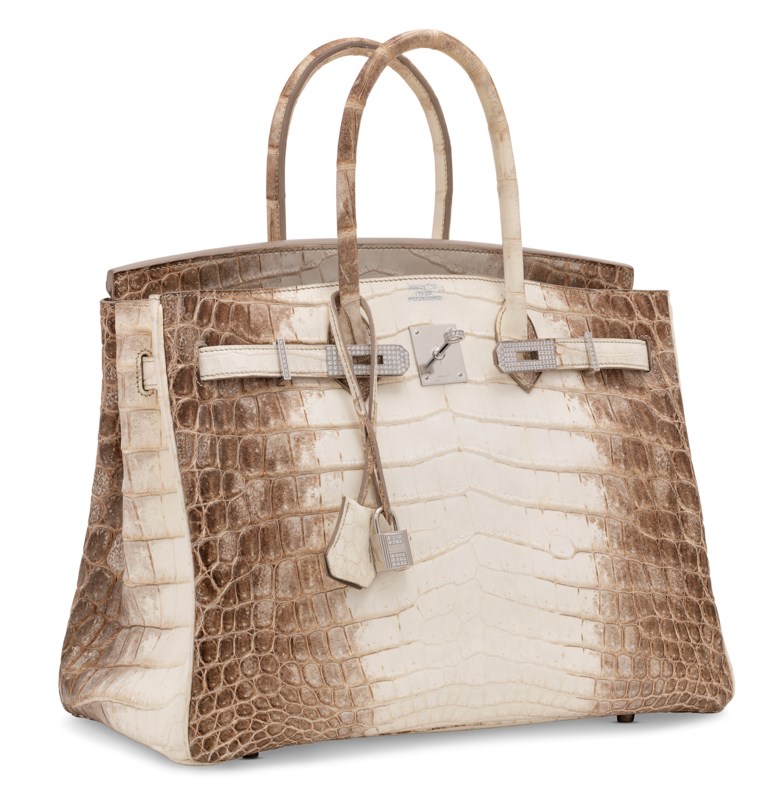
Christies [https://www.christies.com/features/Deconstructed-The-Hermes-Himalaya-9532-3.aspx]
Studying Communication Design at Monash University is a platform for me to share my ideas and to identify myself as an aspiring designer, though the challenge of it all was, how am I awarded the marks if what I perceived as ‘good design’ was not ‘good design’? Subjectivity was painstakingly present in our classroom and the debate around how a criterion should be met, raised questions about, what is good design when the criteria was made to be the subject of what lead our decisions? Coming from an art background, it was always extremely hard to remove my perception of what was aesthetically pleasing in the realm of the design world meant, my definition of ‘aesthetic’, was if it was easy on the eye and evoked a happy emotion. As years progressed into the 3-year course, my understanding of what it meant to be functional in design occurred to me and developed a belief that design was a tool, less about what it looked like and what it delivered and therefore, represented.
Whilst analysing the definition of ‘good taste’ is necessary, it is more essential to include the significance of what lead up to attaining this sense of ‘good taste’. To what extent, or to what number of products and ideas you have to acclaim to be deemed to having good taste is debatable, it is endlessly subjective and never definitive. An individual’s idea of beauty might consist of skinning a live snake to produce a handbag, whilst another individual might think that this process is unethical and therefore ugly.
Bruinius raises an interesting claim that a person is regarded as exhibiting good taste if he or she is refined in his or her dealings with other people, choice of clothes, choice of home environment, opinions about art and so forth. Whilst this definition is conclusive and rigid, it explores the idea that an individual aspires to be accepted by society because, we purposely and strategically form our personal ideas and opinions about things to make ourselves distinct from society yet simultaneously accepted. This is relevant to how I personally interact with society’s standard of beauty because it is prevalent and applicable to my lifestyle in the sense that I purchase the makeup that celebrities use, wear the gym gear that athletes wear and buy handbags with a name on it. As a result of the financial damage done to my bank account, we must consider the reasoning behind these egoistic purchases.
Being specific by the things we wear, see, touch and eat is a curation of the things we want to identify ourselves with. We are constantly bombarded by an infinite amount of advertisements that crave our attention, only to which individuals can handle an amount that is relative to their values, beliefs and morals. By accumulating objects and ideas to define our identity, we raise the question about why we want to pursue these objects to fit out particular taste or style. Though some might deny that they do not actively curate their image, they identity themselves by actions and behaviour towards things inherently define us as an individual.
By interviewing high end designers, such as Nadège Vanhee-Cybulski, who is the Artistic Director Of Hermès, renowned for the iconic Birkin Bag, can we then understand her intention and creative thinking behind this controversial asset. She describes the Birkin as “timeless”, meaning that it will still remain beautiful if conserved in supreme quality as time makes its course. Leading up to obtaining one of the world’s most expensive bag, must you understand that it is a statement created to spark opinions about your financial status and taste in products, this is demonstrated by the hundreds of thousands of dollars invested for a bag could be replicated, duped and remanufactured but with cheaper materials. They are paying that amount of money because of its originality and scarceness – what does that say about ‘good design’? According to Vihma, 2007, states that “when it comes to design, it is often pointed out that a product must have content, not just appearance” [1]. Whilst this comment speaks volumes about what a Birkin bag represents, it demands understanding about the importance of design that coincides with the status symbol.
Nadège Vanhee-Cybulski could have designed an asymmetrical, dysfunctional and unattractive bag with the utmost divine materials, yet a small population would have thought it was grotesque. This feeds the idea that ‘good design’ exists, when it meets a level of criteria that gives it content and meaning, “the product should be well worked out from a holistic perspective that is, thoughts about the product are more crucial than its creation” [2]. The Hermes designer not only considered the effects of the deliberate design of the Himalaya, she utilised materials such as Albino Crocodile skin and valuable pieces of diamonds and gold detailing to attract the minority of wealthy individuals, knowing that they will be overlooking its design for its value. This to them is good design, because it inhibits these rare materials- I think it is neither functional nor beautiful, because of its incompatibility with my taste in patterns and structure. Purchasing a bag like this would serve me one purpose, to portray myself as somebody of higher status.
The relationship between ‘good taste’ and ‘good design’ is a subjective topic, only by giving meaning to what objects symbolise and communicate, presents to us of something of value when concerned with ourselves. As a designer myself, I seek to understand the intention behind charismatic design and the social influences that define the standard of beauty and therefore taste. It is important for me to understand that practises of design intend for different outcomes.
[1] Adam Mack (2012) The Politics of Good Taste, The Senses and Society, 7:1, 87-94, DOI: 10.2752/174589312X13173255802166
[2] Ask, T. (2004). God Norsk Design – Konstitueringen av Industridesign
som Profesjon i Norge. Academic dissertation, Oslo School of
Architecture, Oslo, Norway.

 Design Ideas