War on Waste
We have reached that point. We are frequently throwing away excessive amounts of food, clothing, appliances and plastic packaging that our waste is growing at a faster rate than that of our population. How can this be sustainable?
These problems of toxicity, pollution and waste in our society were a key theme of the Welcome to Wasteland Exhibition (14-24 March), which was held in relation to the Melbourne Design Week program.
Welcome to Wasteland showcases projects by various creatives – including architects, industrial designers, graphic designers and researchers – to explore the use of waste materials and offer visitors an insight into how leading practitioners are challenging Australian waste issues [1].
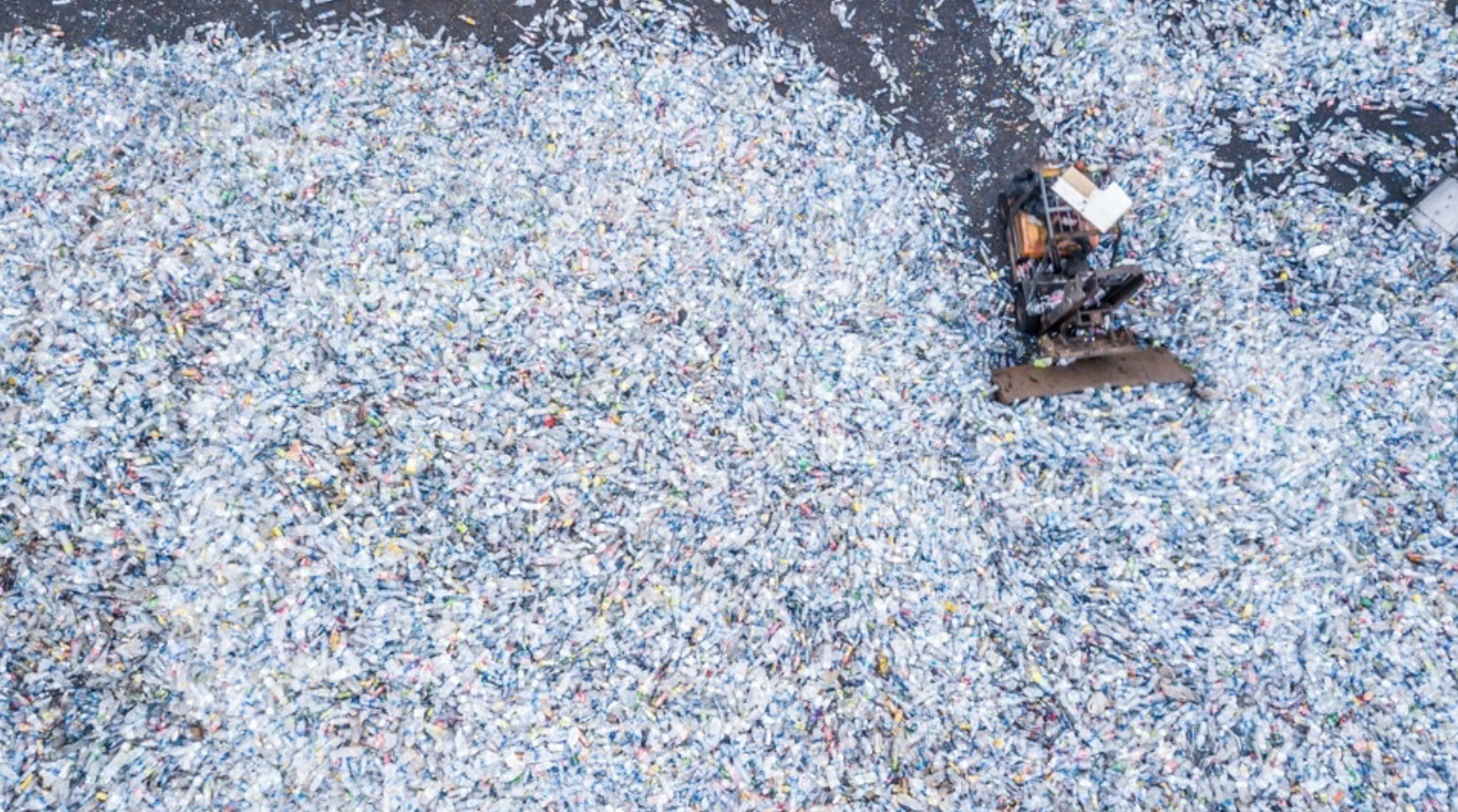
This theme draws upon the perspectives made by anthropologist Mary Douglas on dirt and culture. For Douglas, every society has some concept of dirt which is relative to its circumstances and needs. She highlights, “There is no such thing as absolute dirt.” What she is accentuating is that almost anything can be considered dirt if it is in the wrong place [2].
However, there will always be things that do not quite fit in, and they will be seen as either ‘dirt’, ‘waste’, ‘by-products’ or ‘pollution’. Thus, some kind of forward thinking is required in order to create value and meaning from materials that might otherwise remain ordinary and neglected.
Turning Trash into Treasure
The Welcome to Wasteland Exhibition challenged designers to ‘Make a statement. Make a difference’. It was time to step out of conventional practices and many designers embraced the concept in their works as they pushed the boundaries. But none on display caught my eye as much as the CMYK Chair by Morgan Doty.
Morgan was inspired by picking a material and process which would push the limitations of re-using waste materials. Her design explores the recycling of shredded paper pulp which was moulded over a CNC cut form. The chair uses double curvature and ribbing to create a very strong and comfortable shell structure. But when I took a closer look at the materials she used, it virtually told its own story of the magazines it is made from that were collected across the University of Melbourne Campus.
According to Morgan, “It was important to get the mixture right to showcase the texture and quality of the material” [3]. What is interesting is that her design was never intended to be what it is now – a chair. The form was determined by testing the process to understand the durability and the strength of the material. Once the form was a double curvature and shell structure, turning it into a chair made sense using recycled timber [4]. This goes to show that sometimes seeing the beauty in an inconspicuous piece of rubbish can open our minds to many different possibilities.
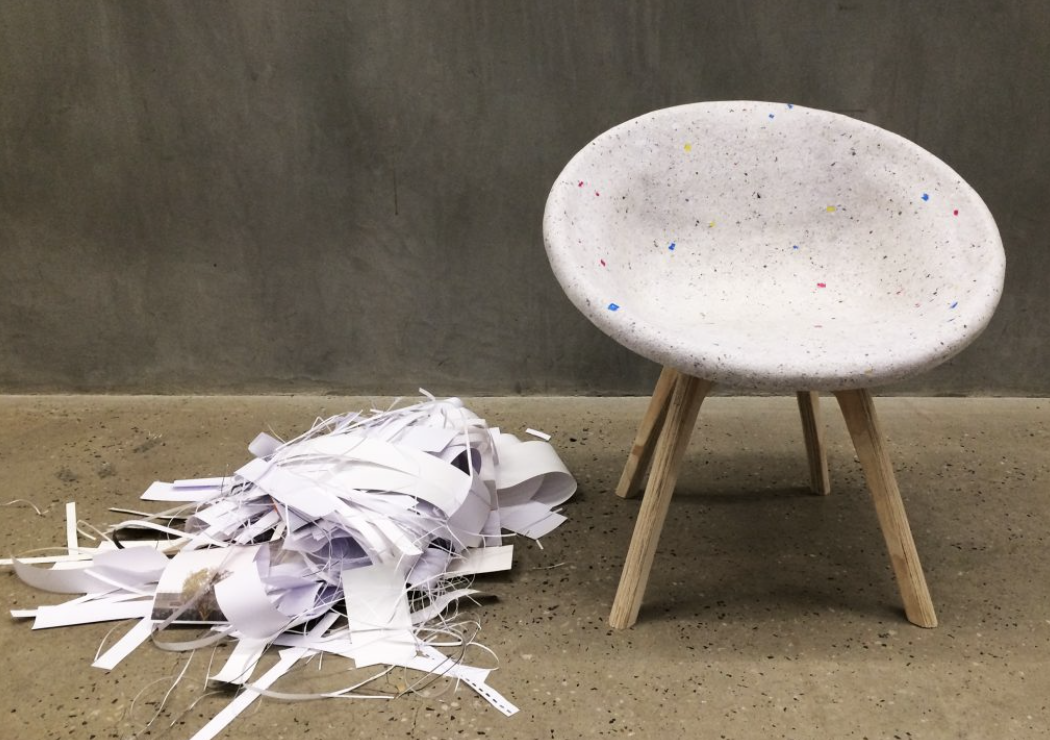
Despite being in her final year of tertiary education, the experience has shifted Morgan’s perception on design. “I loved how this was a balance between making and architecture and it is something I’d love to do more of in the future.” Morgan then went on: “Making makes you think a lot more about the design because you have to ensure it can viably become physical” [5].
This outlook is innovative. Instead of focusing on the threat of waste, Morgan has been able to interpret and display how waste can be used to solve other problems. She has effectively considered the situation as a glass half full, rather than a glass half empty.
Imagination is core to these ideas. It is essential to imagine things differently if we are to start to think our way out of these problems. Together, the design community may just create a new way forward in this rapidly changing world.
References
[1]https://greenmagazine.com.au/welcome-to-wasteland-an-intimate-chat/
[2]https://www.domusweb.it/en/design/2019/04/04/absolute-toxicity-review-of-me lbourne-dsign-week.html
[4] Ibid.
[5] Ibid.

 Design Ideas
The environmental crisis caused by global climate change has led us to pay more attention to sustainable development issues. As stated in the post, we threw away a lot of things and wasted too much. These wastes can be reused through our innovative methods to achieve sustainability and create new value. Designers from different disciplines participated in exploring the use of waste materials. They think about solutions and try to turn trash into treasure. They abandon convention practices, make changes, and find innovation.
Innovation reminds me that there are now many sustainable buildings that use waste materials. Architects develop a sustainable design based on deconstruction. Deconstruction is a purposeful dismantling of a building and recycling as much of the material as possible. Architects use old building materials to create new buildings. This will not only reduce waste but also conducive to sustainable development. High Line is a good example. It is a new urban public space transformed by an abandoned elevated freight railway. It is representative of innovative design and sustainable design. While making use of waste, it creates a diverse outdoor leisure space for people, which has brought about tremendous changes in the quality of life in the city. https://www.thehighline.org/about/
Its success attracted the attention of the rest of the world, such as it appeared similar in Sydney called Sydney Harbour High Line. https://www.sydneyharbourhighline.org.au/
I hope that more designers can participate in exploring the use of waste materials and start paying attention to waste. Designers use the waste around them to develop their creativity and bring new uses to waste. Designers use design to make people pay attention to and improve global environmental issues and create a better future together.
LikeLike