With the improvement of education level in society, designers become getting more attention by people, however, most are known as male designers, female designers are always be considered marginal as the influence of patriarchal society. Industrial design is often be seen as a male-dominated industry, although there are some outstanding female designers, they might be forgotten as the social impact.
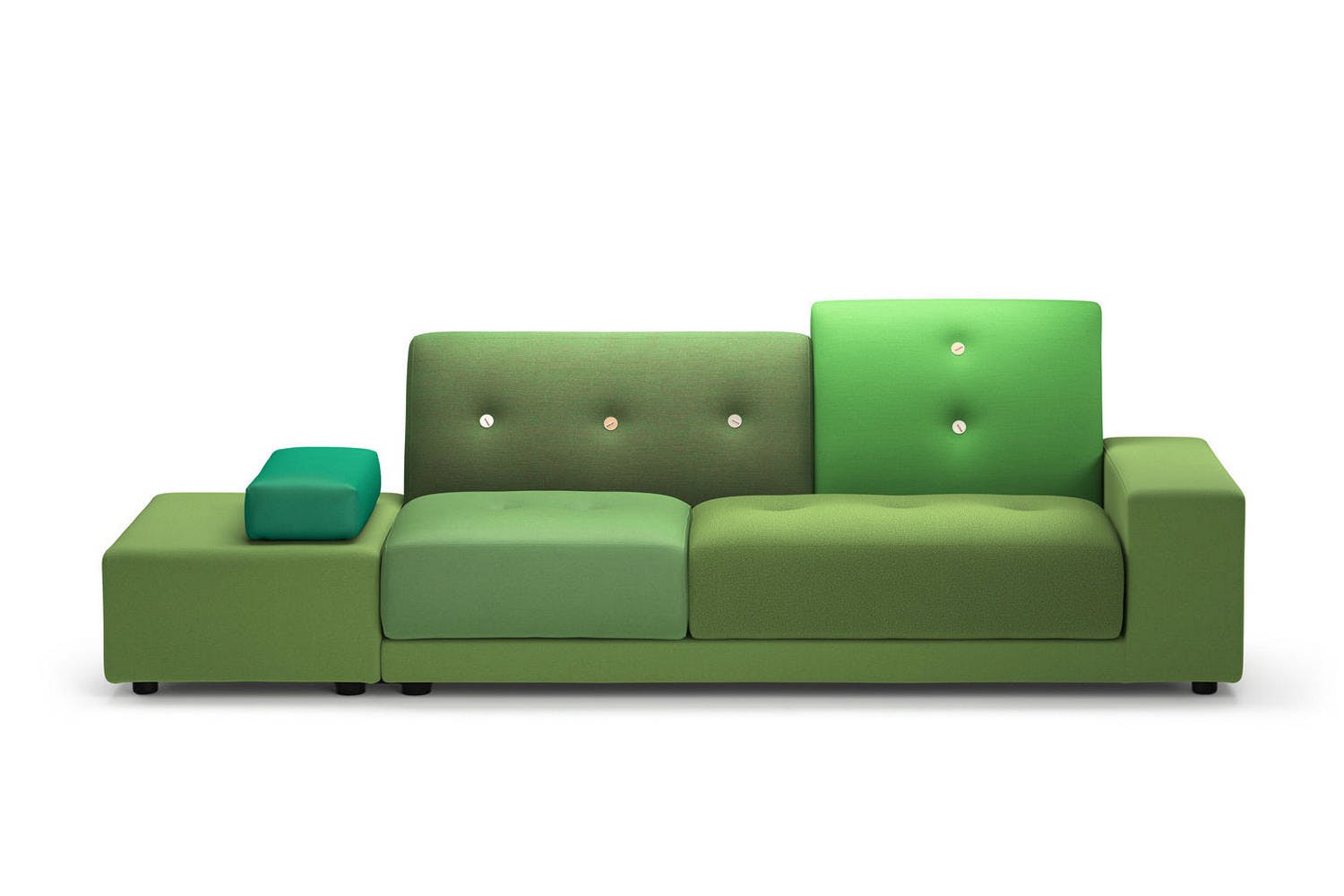
“The Polder sofa” (figure. 1)is one of the well-known design of the international furniture company Vitra but there are only a few people may know who designed this impressive furniture. The sofa has been divided into a few parts and each part with a specific texture and pattern, green is the main colour been used but each section with a different shades of green, and finished with trailing threads and hand-sewn buttons. [1] It is a well made product and ready for mass produce. Hella Jingerius, is a female designer based in Berlin, she was obsessed by the texture of handmade objects and exploring the associations between industrial design and craft process and “The Polder sofa” was designed by her, she is good at designing products with rich colour palette which is a sort of rare ability in common industrial design practice. In this case, it does not means the common product designs with bad taste of colour, the issue is most of the industrial designers prefer to stay in their safe zone that the invariance of the colours they used in design. To change that status of contemporary industrial design, Jingerius came up with her thoughts that utilise natural variations in colour sensory to improve current design. [2] And this sofa also identity her design theory that combine craft skill with mass produce as bring artistic standards into the industrial production process is her professional policy. [3] Handmade products usually are not intend to be mass produced, but Jingerius did this well even though it is a concept that hard to achieve.
Jingerius made a significant contribution to the design world as an industrial designer that dared to put rich colours on her design and fused craft process with a standard aesthetic of industrial design. Alice Rawsthorn said: “Jongerius’ greatest achievement is bringing sensuality and sophistication to the sanitary industrial design”. [4] It is not strange that this outstanding designer has been ignored as only a few females worked in this industry. According to Margaret Bruce, there is only one woman product designer who was identified in the survey done by a research group and none interviewees could remember if any female designers were currently working. [5] This sort of situation demonstrates the tough environment that female designers work in in industrial design, not only the quantitative difference between female and male industrial designers, but also social ideas of contempt for women caused this situation. In fact, most of people think women are not able to work in furniture design or wrought-iron as they question female designers’ ability. [6] As industrial design is known as a technical and dirty area, which is a sort of masculine work, people think this is not suitable for women. Furthermore, the disapproval from society to female designers and suspicion of their competence is a part of the reason production engineers refuse to communicate with female designers. [7] This sort of stereotype makes it very hard to survive for female designers and they gradually lose confidence.
In conclusion, society should pay more attention to the female designers’ achievements in industrial design, as one of the typical examples to demonstrate women designers has been placed in the margins. Although Jingerius did some incredible innovation in this world, people may not pay attention to her as they think women are not able to succeed in the industrial design world. None of the achievements are decided by sexuality, and neither does any sexuality specify a career. Realising female designer’s contribution to the design world, especially in industrial design, is a part of the development of society.
[1] Sellers, Libby. 2017. Women Design. London: Frances Lincoln, imprint of The Quarto Group.
[2] Pearce, Margaret, and Lācis, Astra. The Misfit. 1984. Kenthurst [N.S.W.]: Kangaroo Press.
[3] Sellers, Libby. 2017. Women Design. London: Frances Lincoln, imprint of The Quarto Group.
[4] Rawsthorn, Alice. 2010. Daring to Play With a Rich Palette. The New York Times. 4 March 2014.
[5] Bruce, and Lewis. 1990. Women Designers: Is There a Gender Trap? Design Studies 11, no. 2: 115.
[6] Ibid, 116.
[7] Ibid, 118.

 Design Ideas