Introduction
Nature has a profound influence on the human experience in general and human expression specifically. In fact, Plato claims that the artists’ works merely imitate nature[1] and do not create new nature. I would like to examine two different modes of influence – the first cultural and the second functional – that nature has over human expression within the realm of art. Lastly, I would like to demonstrate how the functional influence of nature on design has been utilised in my own personal work.
How nature can have a cultural effect on art and design
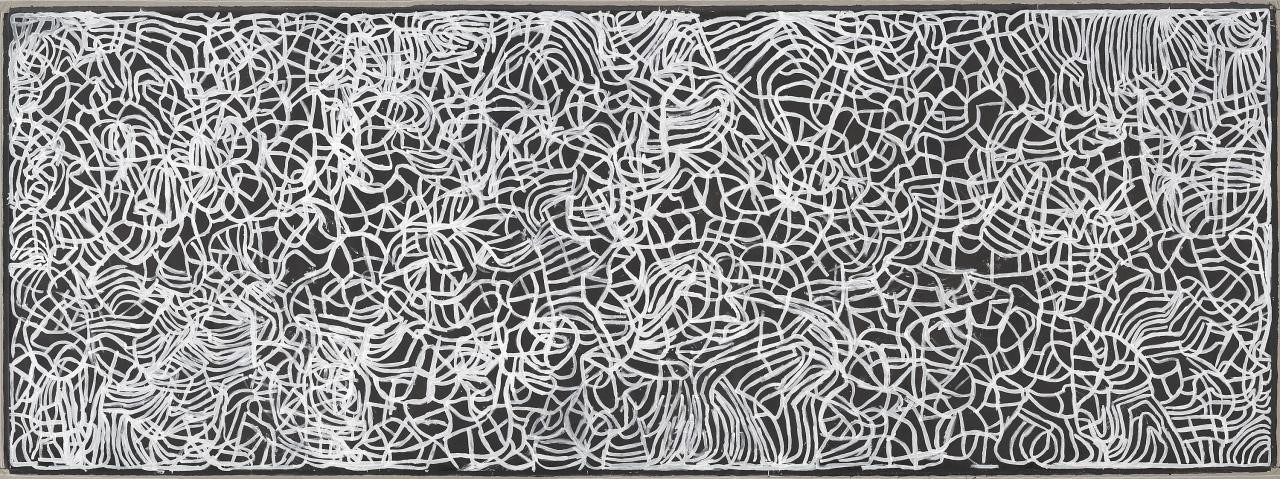
Emily Kam Kngwarray’s Big Yam Dreaming[2] exemplifies a cultural-epistemological relationship with land and nature. Kngwarray’s land of birth, Alhalkere, is depicted characterised by a pre-eminence of finger yam growth through a convolutional network of underground root structures that crack and split the ground when the leaves ripen. Kngwarray does not merely depict a curious natural occurrence, but a special subjective, cultural (and perhaps sacred) relationship which she shares with the land. The continuity of the single white line set against a strongly contrasting black background lends an abstract expression of this relationship, hinting to a sort of surreal, emotional rawness that can not be described in words[3] and must be understood within the frame of her background and culture. In contrast, and perhaps ignorantly, Imants Tiller’s Terra Incognita (2005) suggests an anonymous and decontextualized relationship with the land- considered sacred and subjectively significant to so many, dryly robbing it of the specific meaning and deep history that it has to share. By implication, the cultural significance of land/nature lend far greater credence to the expressions of those connected to it and these expressions must therefore be understood vis-à-vis their cultural/historical context.
How nature can have a functional impact on design
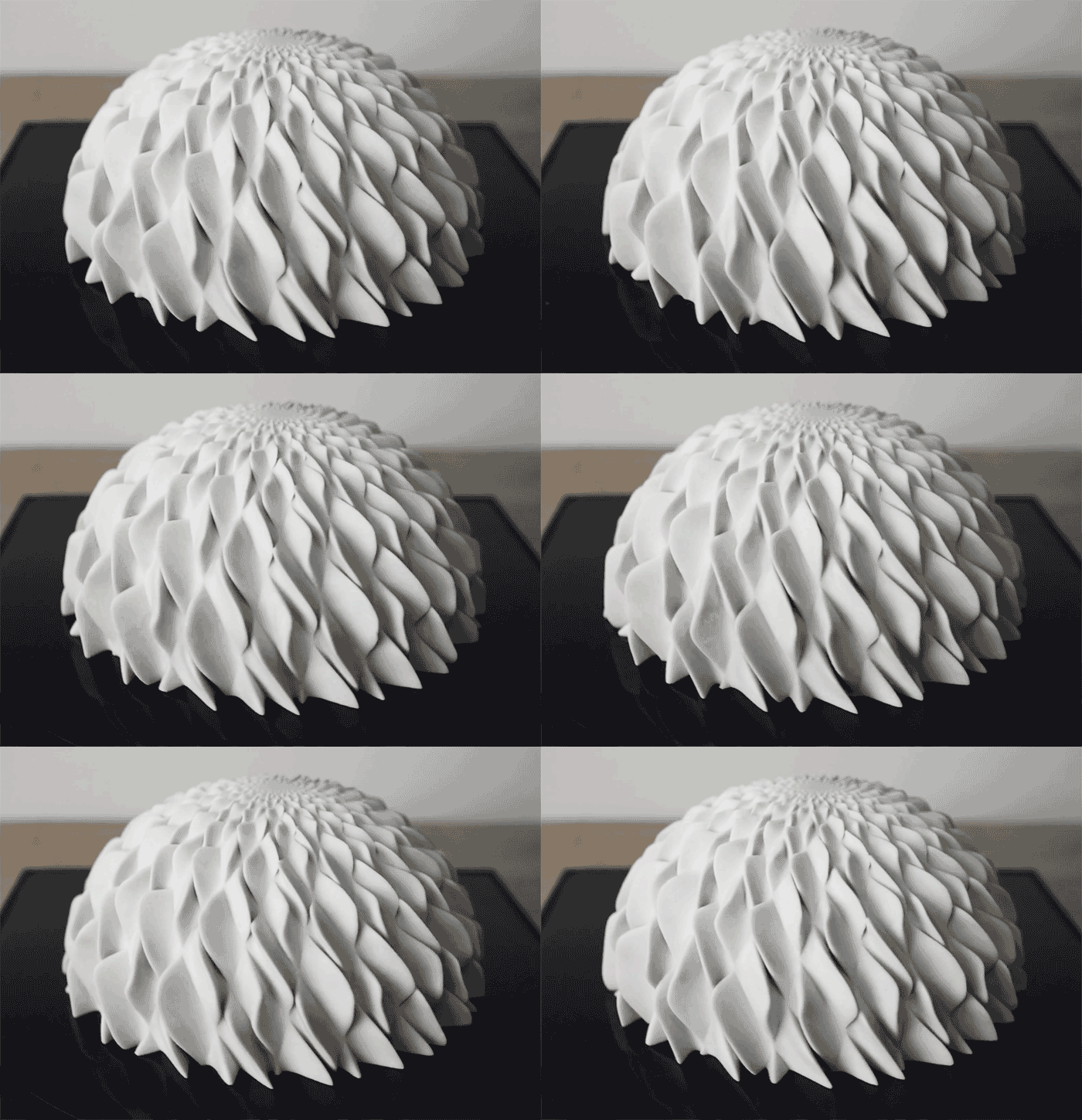
In addition to subjective/cultural meaning that nature and land-heritage can imbue art and design, there are significant functional elements of nature that can be used to better inform design processes and outcomes. Designer and computer scientist John Edmark explored this abstractly through his work ‘Blooms 2’ (2017) where he algorithmically generated a series of kinetic sculptural forms influenced by ratios found in the development of various plant-life.
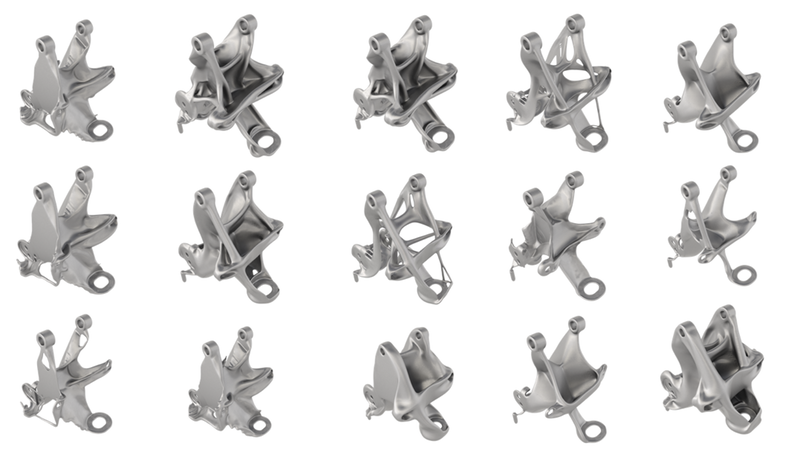
More pragmatically, researchers at Autodesk have not only looked at features in nature, but also processes, to influence and optimise design methods and outcomes. Much of this is seen through their use of evolutionary algorithms. Evolutionary algorithms, a meta-heuristic branch of machine learning, are inspired by the way in which organisms in nature with the ‘best’ traits tend to mate and pass their genes on, ensuring that the evolutionary result is most fit for survival. Similarly, these processes have been applied in computation and design, by testing combinations of different ‘traits’ (and subsequent combinations of those combinations) based on a desired goal. This method of and iterating has advanced traditional techniques based on human trial and error.
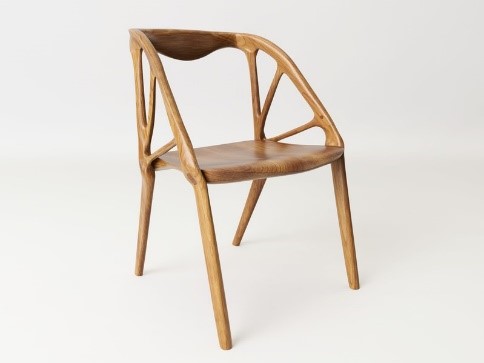
Interestingly, scientists and designers have referred back to natural occurrences in order to inform more complex technological processes that have redefined design processes. Indeed this methodology is not limited to optimising technical design but also spans the realm of aesthetics. The Elbo Chair designed by Arthur Harsuvanakit and Brittany Presten of Autodesk’s generative design lab is one example amongst others including Joris Laarman’s Bone Chair (2004) that utilises evolutionary design processes to generate unique and complex forms.
My own application of these concepts
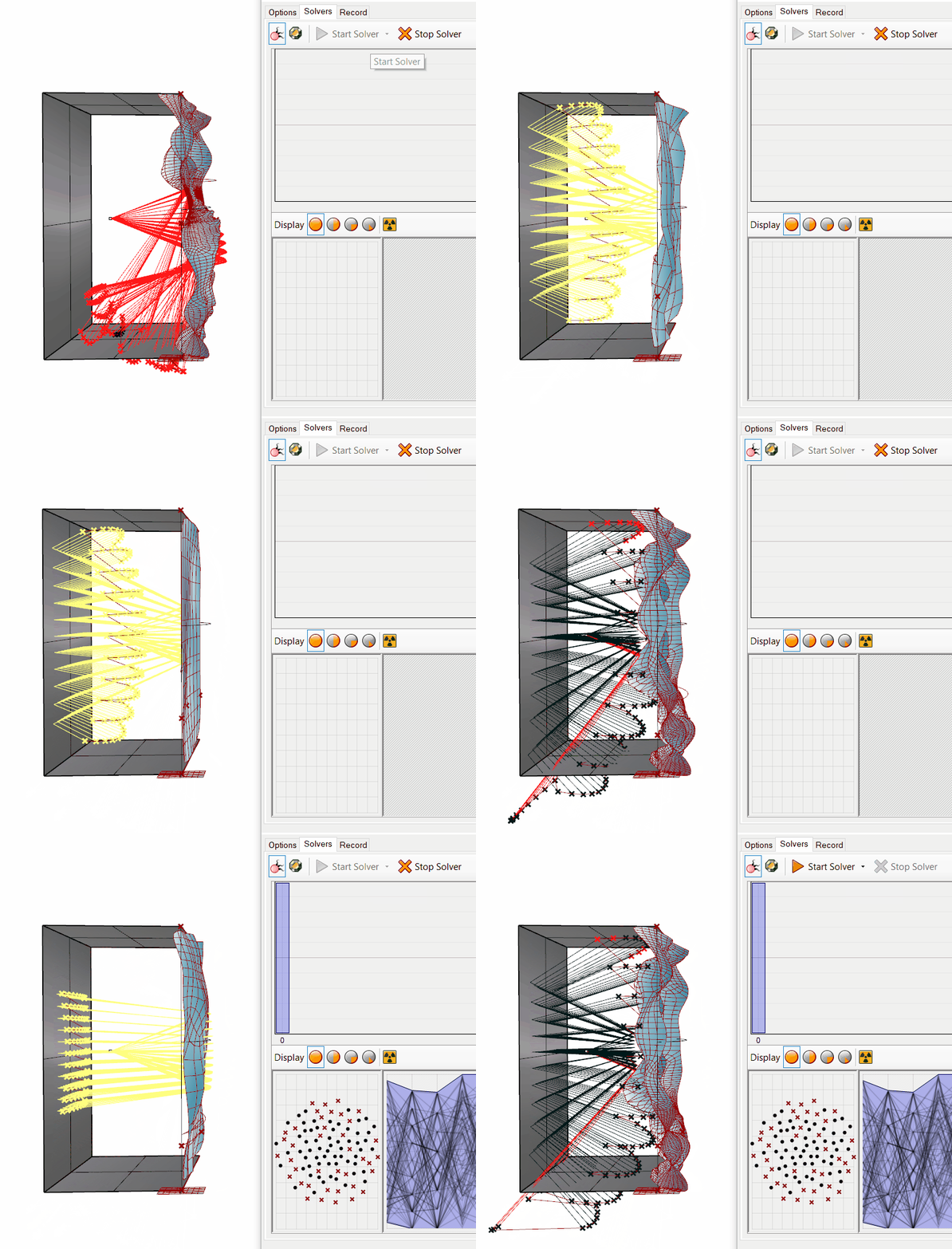
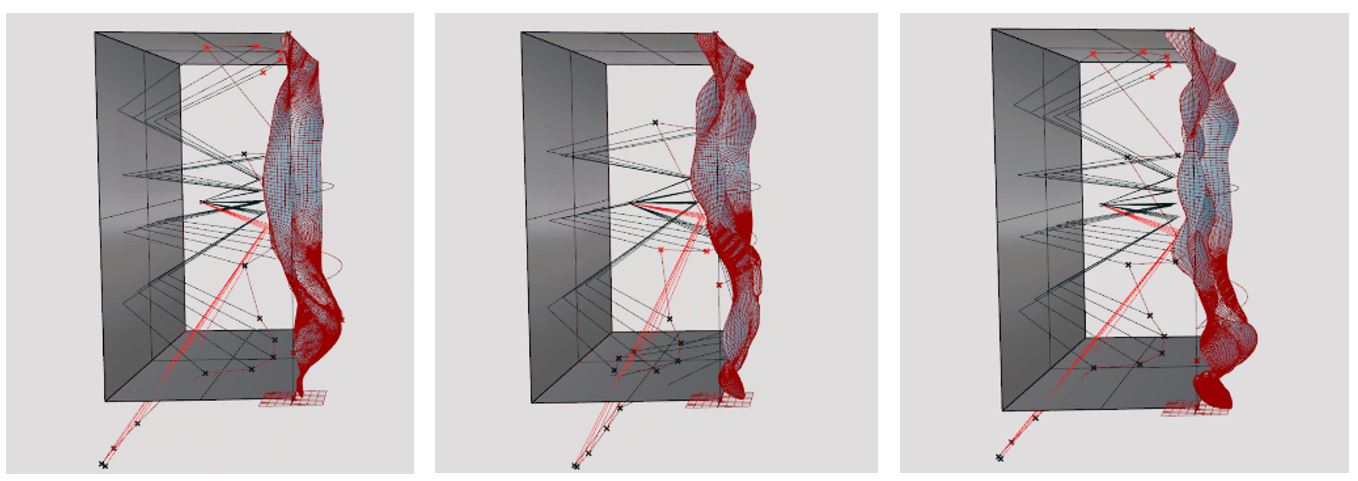
In a research piece, I too utilised generative design methods to create uniquely aesthetic and optimally functional forms, combining my IT and Design skillsets. A collaborative project that I undertook sought to generate acoustic panels that would optimally diffused and absorb sound, reducing echoes in a room and at the same time providing a compelling aesthetic that could be manipulated by the user. The algorithm took a sound-point and attempted different variations of the surfaces, measuring the effectiveness of transformations by the extent to which they diffused the ‘virtual sound waves’, resulting in a generative surface that could be milled out of foam. Having a computer create a form based on a set of biases truly follows Louis Sullivan’s famous axiom that “form follows function”, much like it does in biological systems.
How my work reflects a different relationship with nature
Indeed, unlike Kngwarray’s deep, heritage-based relationship with nature, mine is purely an external admiration as a pose to a cultural-historical immersion. I look at elements of nature than I can derive rules from and solve problems with and utilise them within my own methodology. Contrariwise, Kngwarray seeks to replicate the nature that she experiences due to its inherent sentimental value. (Notwithstanding the fact that I have my own cultural-national relationality with other lands and do not adopt the distant and sterile position about land and nature ad-infinitum.)
Remarks
We have briefly looked at two ways of learning from nature, the first a sort of abstract cultural-historical way determined by the relationality between people and their land and the second, an attempt to replicate rules in nature and to use the same methods to solve complex-yet-enabling design problems.
[1] Plato’s Republic, book X. See Sydney Phillip’s ‘Defense of Poesy’ for a strong counter.
[2] Kngwarray, E.K. (1995).Big Yam Dreaming. Retrieved from: https://www.ngv.vic.gov.au/essay/kwementyay-kngwarreyes-big-yam-dreaming-2/
[3] Ryan, J. (May 27, 2014). Kwementyay Kngwarreye’s Big yam Dreaming [Blog post] Retrieved from https://www.ngv.vic.gov.au/essay/kwementyay-kngwarreyes-big-yam-dreaming-2/
[4] Edmark, J. (2017). Blooms 2. Retrieved from http://www.johnedmark.com/
[5] Dannob, B. (May 3, 2018). How GM and Autodesk are using generative design for vehicles of the future. Retrieved from https://adsknews.autodesk.com/news/gm-autodesk-using-generative-design-vehicles-future
[6] Harsuvanakit, A. Presten, B. (2004) Elbo Chair. Retrieved from https://www.wired.com/2016/10/elbo-chair-autodesk-algorithm/

 Design Ideas