In today’s society, gender discrimination, racial discrimination and other unfair phenomenon are inevitable, however, design plays a vital role of shifting our subconscious. Designers produce works we use in our everyday life, such as small things like soap machine; the package of a toothpaste brand, etc. Good design makes people reevaluate themselves and bring people good influences. Whether by accident or on purpose, designers are changing the world. In contemporary time with imbalance ,there is a place where no matter how old you are and where you come from, you can find a comfort zone of your own here— 21st Century Museum of Contemporary Art.
Kazuyo Sejima is the second female winner of Pritzker prize which is the Nobel Prize in architecture industry after Zaha Hadid. Different from “the queen of curves”, Pritzker Prize jury described Sejima’s work is “Simultaneously delicate and powerful, precise and fluid” (Sellers, 2017). Sejima founded SANAA studio in 1987, which means Sejima And Nishizawa And Associates, the conjunctions are capitalised, emphasising that the connections uniting the people are as important as the people themselves (Sellers, 2017). She looks into human behaviour and combine her study 888 into her architectures.
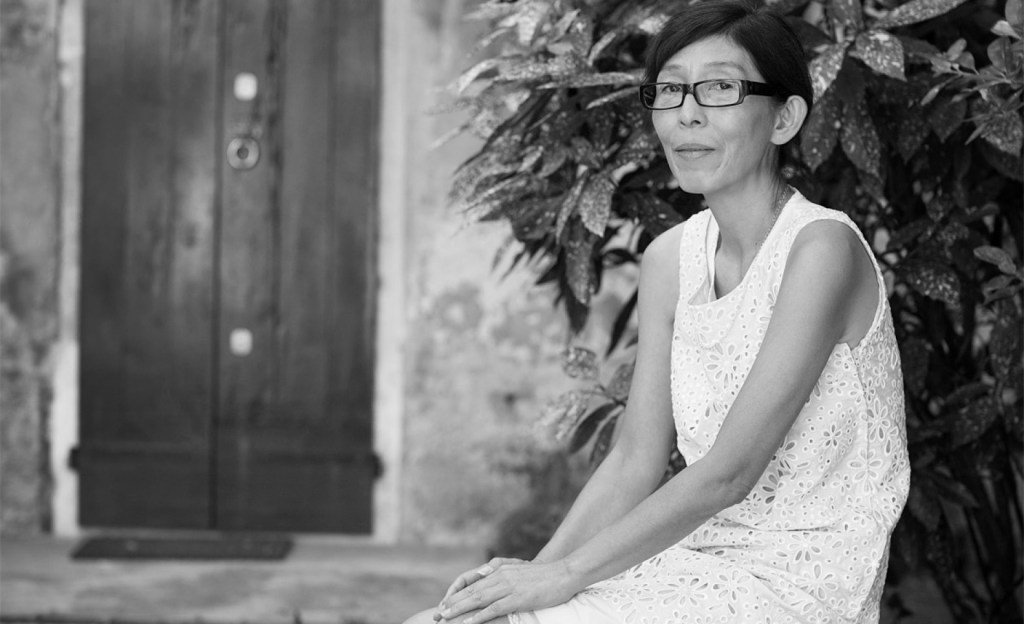
People who visit the building can feel the idea of “uniting” in her design, as Sejima is trying to convey, “the gathering of people”. Generally, Sejima uses white as the main colour in her buildings, for example, the white ceiling, the white walls and white windows. The pure white covers the whole building which reminds us of a peaceful, relaxing and equal place. Inside the The 21st Century Museum of Contemporary Art, Sejima uses minimal material palette with limited details to depict a fluid spacial organisation. In an interview with Arch daily, the host asked about her understanding of white. She pointed out the white walls that surrounded her and said, “white is an ordinary colour, I try to make no hierarchy. That means also try to make free circulation, we try to bring light everywhere, try to make no big contrast, try to diffuses the light, I want to make people feel white” (Franco, 2016). Sejima hopes people from all over the world are allowed to feel that they are welcome. According to the reading Margin Design Studies (Onafuwa, 2018), “White Standard” which means western- dominant standard, are one of a fact that causes racial discrimination from the design of everyday products unconsciously. Thats why the author proposes that we should re-identify the meaning of “white”. Sejima has given “white” a new meaning here. There is no hierarchy in the space, there is no hierarchy among people here.
Since it brings people with different interests and different purposes together, Sejima quite likes the concept of parks and suggests that the public space is very interesting in terms of human interaction. Sejima tries to challenge the impression of traditional gallery which is cluttered with incomprehensible art works that gives visitors a sense of distance and consequently it’s difficult for people to enter. She challenges the relationship between arts and people. Museums that Sejima designed is like a park that everyone can join. “We began with the concept of an ‘open’ museum so that it is not only for experts but also for the people in the city, who do not necessarily have a professional connection with art,”(Franco, 2016) said Sejima. In the architectural aspect, the horizontality of the museum allows it with more accessibility. People are allowed to access the museum from any direction and flow inside. The floor plan of it matches the idea of welcoming everyone to gather or circulate inside. The concept of diffusing the differences among people, the non-hierarchy is really shown through Sejima’s design.
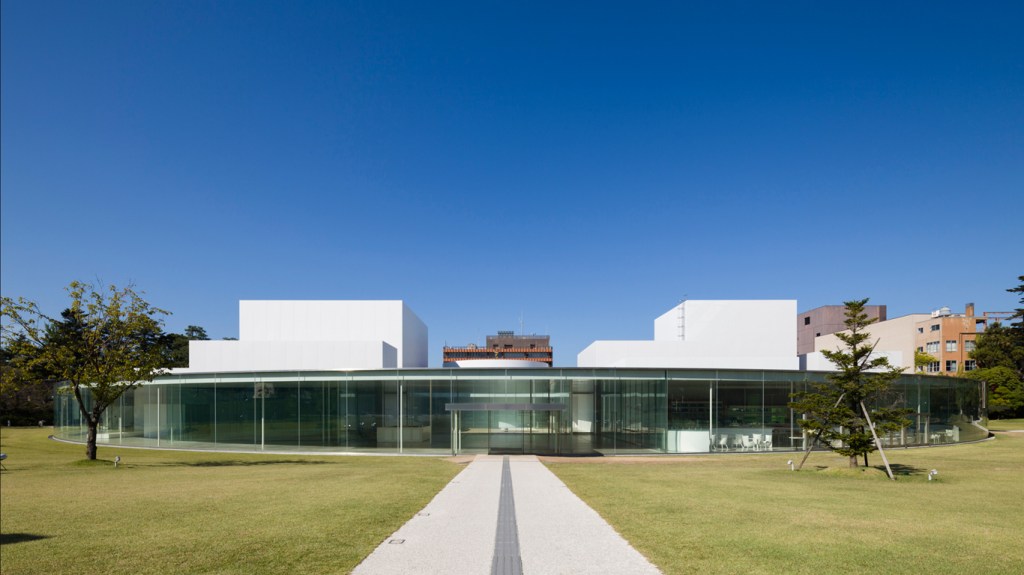
The 21st Century Museum of Contemporary Art in Kanazawa, Japan (2004)
The 21st Century Museum of Contemporary Art in Kanazawa is an urban project which intentionally aims for marketing the city — Kanazawa, Japan. The museum is located in the centre of the Kanazawa. The shape of it is like a disc, which looks like a round cookie from a distance. Different from the traditional sense of majestic founder of the art museum, Sejima takes the circle as the primary shape of the design, also, the circle itself has a strong centripetal nature. People can engage in various outdoor activities around the circular building, forming a most primitive communication activity. In addition, the Japanese have a complex feeling to the “Circle” since ancient times, either the red sun in their national flag, or their worship of chrysanthemum, is showing that circle is special to Japanese people. Overall, the usage of shapes is simple but interesting. Sejima breaks the space into smaller spaces so that there is no specific wall that blocks visitors inside the museum. Those cubic rooms on the top are divided into different exhibition rooms, which give curators and visitors more freedom to interact with. As for the visitors, they will have their own choices on moving route inside the museum.
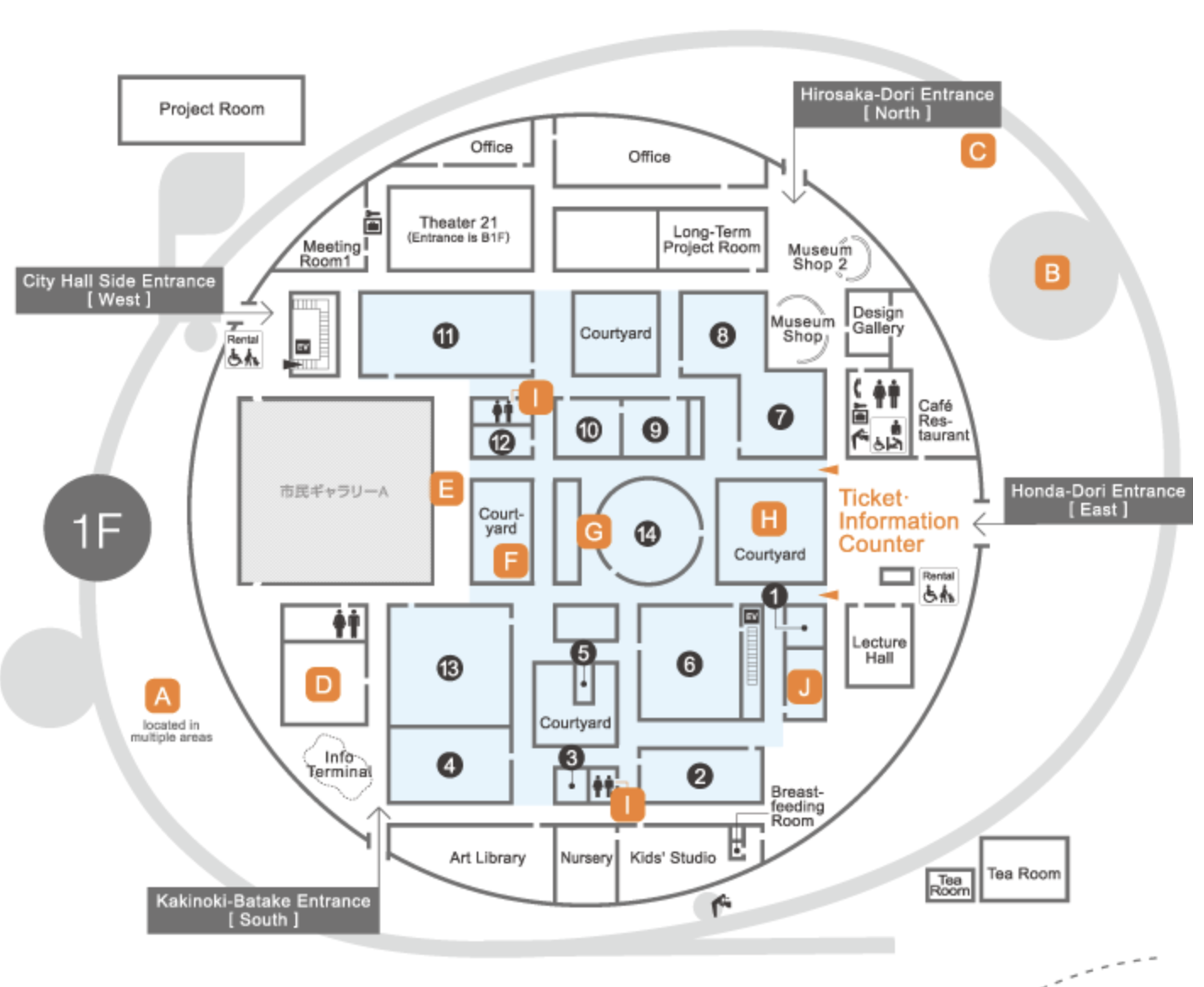
Figure 2
There is a strong feature in SANAA’s works — lightness. Her works are always about perception and feeling. They are clever on using materials and exploring various techniques. Therefore, their works are very penetrating and reflective. In Sejima’s works people will find that there are various levels of transparent material, in other words, a large amount of glass are applied to the interior structural pillars start to emerge into the space with them hidden to the corner by designers purposely. Sejima blurs the internal and external space of the museum, making them a kind of ambiguous relationship. The reflective characteristic of the material of celling makes indoor space in harmony, she eliminated the boundary of the upper space and the lower space visually. Step away, observe from the outside, the base of the museum is glass, in comparison to the blocks above, this design gives viewers a illusion that the museum is floating in the air.
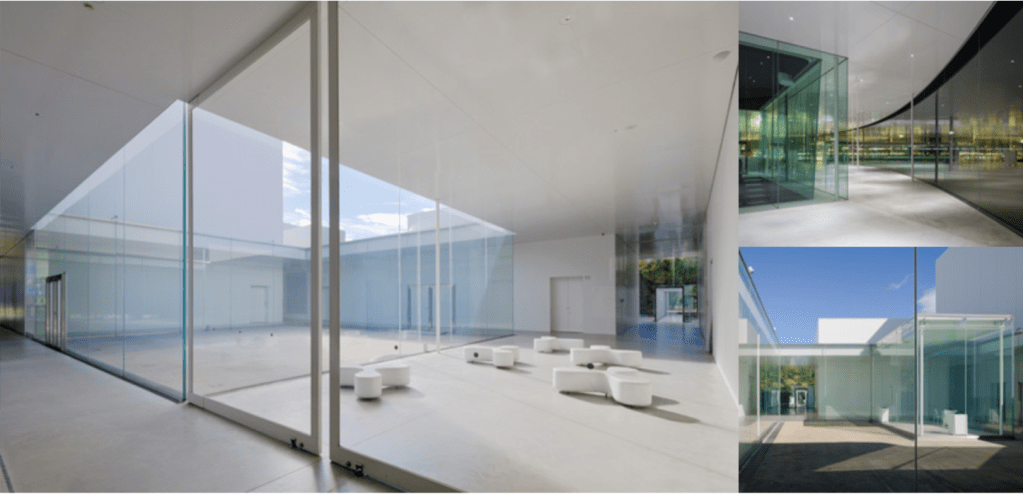
Figure 3
To understand a museum is not only from the architectural design of the building, but also from the content of the museum, such as the art works that exhibited in the museum. The most famous one that picked by Sejima is the Swimming pool (Erlich, 2004) by an Argentina artist. This interactional design makes an illusion that there is a real swimming pool with water. It’s interesting when people from above look down and make an eye contact with the people underneath the water. She makes an ordinary object extraordinary. The spirit of this museum consists thinkings of different relationships, such as the relationship between different people; the relationship between art and people, etc.
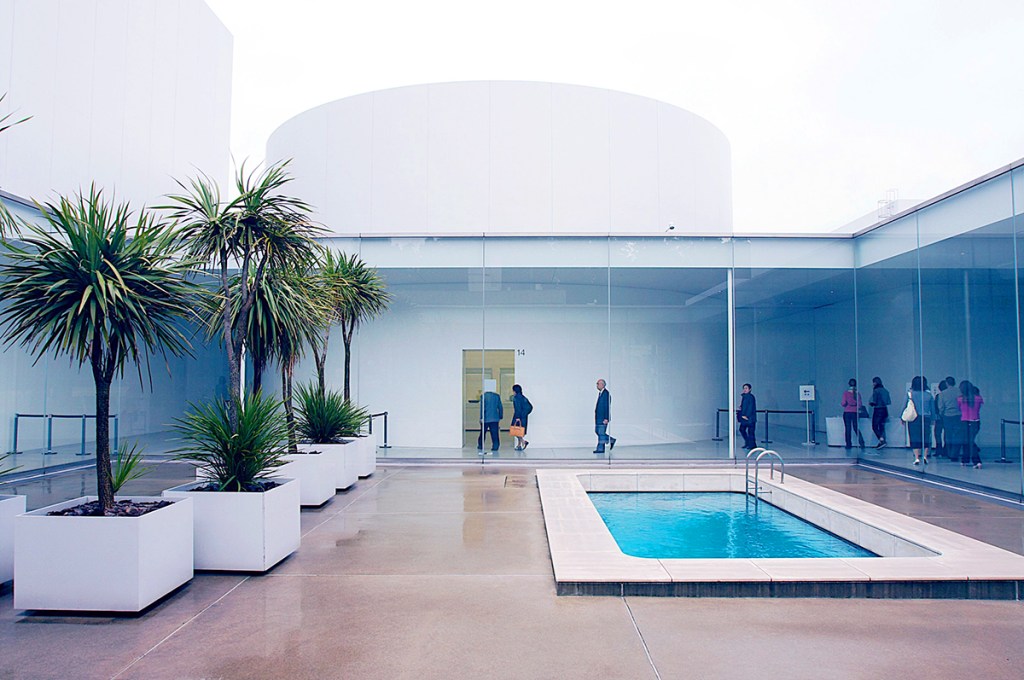
Figure 4
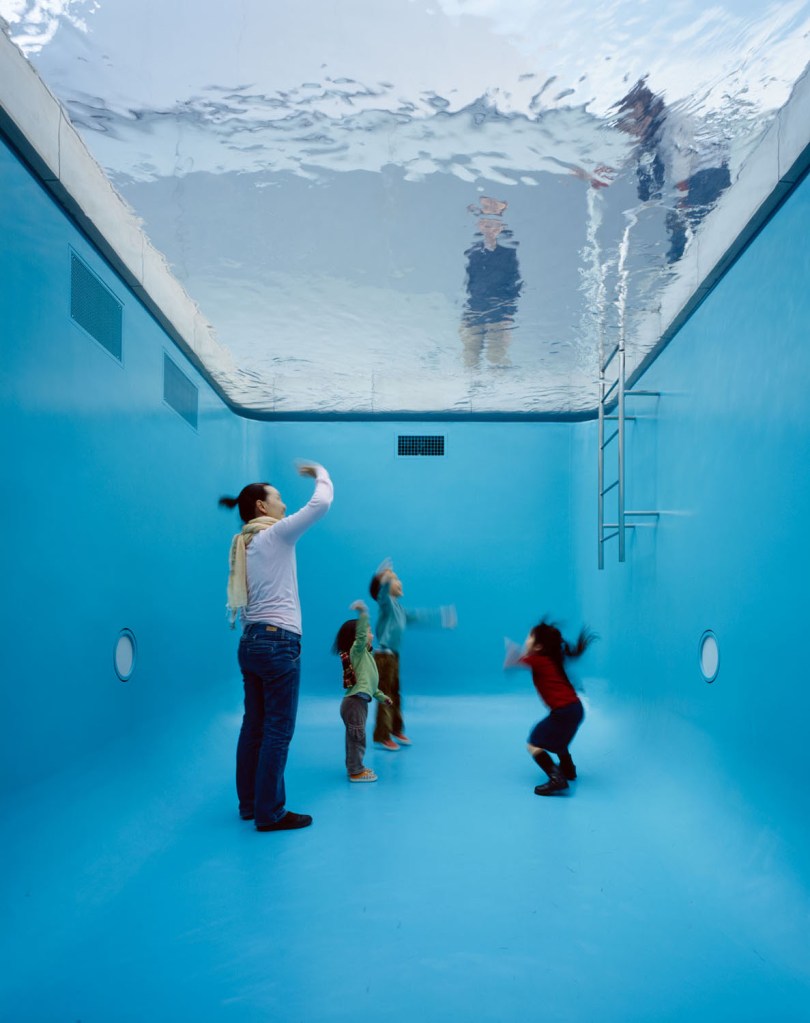
Figure 5
What Sejima brings us is not only beautiful buildings. Design makes people reflect ourselves. Going back to the reading, (Onafuwa, 2018) the author talks about the role of designers that designers should take various reigns, people, cultures into consideration and the solutions that might even the imbalance in our world. As a building designer, Sejima does that in her way. She puts her vision of the community and the future into her design.
Images:
Figure 1~3 : https://www.kanazawa21.jp/en/
Figure 4: https://www.wowlavie.com/building_unit.php?article_id=AE1801833
References:
Sellers, L. (2017). Women design.
Franco, José Tomás. (2016, September 28). “Kazuyo Sejima Explains the Influence of Light and the Color White in SANAA’s Work”.Retrieved from http://www.archdaily.com/795815/kazuyo-sejima-explains-the-influence-of-light-and-the-color-white-in-sanaas-work?ad_medium=widget&ad_name=recommendation.
Dimeji Onafuwa. (2018). Allies and Decoloniality: A Review of the Intersectional Perspectives on Design, Politics, and Power Symposium, Design and Culture. 10:1, 7-15, DOI: 10.1080/17547075.2018.1430995.
More Information:
The 21st Century Museum of Contemporary Art
https://www.kanazawa21.jp/en/

 Design Ideas