Muriel Cooper (1925 – 1994), as an American female professor of interactive media design, was one of the co-founder of the MIT media lab. (Sellers, 2017) In addition to being the founder, Cooper took it as her responsibility to direct the office of publication, by putting a large amount of efforts, such as promoting the Bauhaus-influenced design style into its publications, (Shen, 2014), challenging herself constantly on studying computer programming, leading and teaching a group of students to produce modernist graphic design by using this new technology. (Abrams, 2015) Throughout all these attempts, Cooper sought to pursuit the possibility of a huge amount of flexibility that come from computers but print-based design cannot have. (Abrams, 2015) Cooper has long been considered a pioneer and revolutionary as design moved into the digital era, but her work hasn’t been shown very much. (Young, 2014) Before they can be widely discussed and appreciated, Cooper died suddenly of a heart attack in 1994 at the age of 68, (Abrams, 2015) she has then become a valuable but forgotten superhero who has transferred design into a new landscape. (Abrams, 2015)
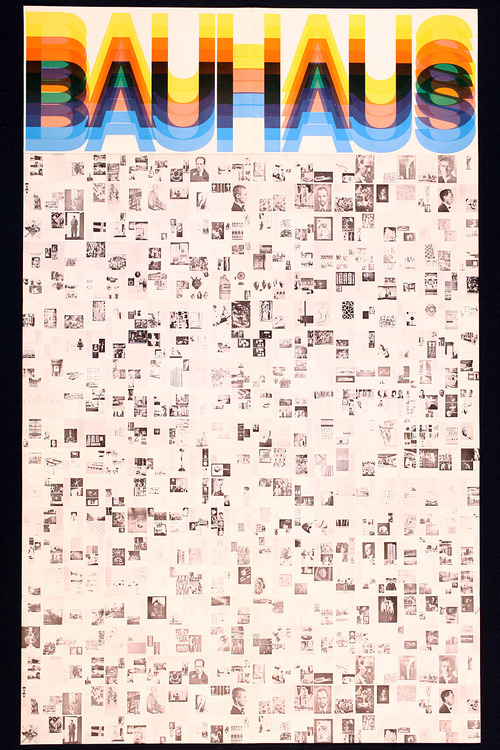
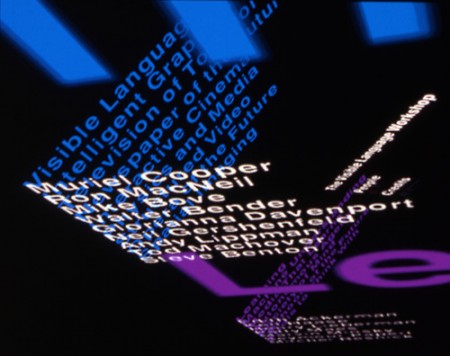
According to Abrams, the work shown at TED5 represented a leap in computer typography. (Abrams, 2015) This new type of interface design – a set of communication vocabularies with motion and sound, (Abram, 2015) is considered as an essential visual experimentation (Seller, 2017) with Cooper’s whole enthusiasm on computer animation. (Abrams, 2015) By such design programming, we can see in the animation, the shape, size, colour and translucency of key components are made to change in correspondence with a given sound and its temporal duration. They are expanding or bouncing with variable diffusion of color across its surface in a way that Cooper called “on- they- fly scaling” to catch viewers’ attention and deliver the information effectively. (Abrams, 2015) Not in a too complex way to show off the new technique, Cooper always made sure such multi-dimensional effect (Seller, 2017) are readable to users. (Abrams, 2015) At this time, it was a refreshingly newfound mindset on design, and was from an important part of the fearless identity of Cooper. (Seller, 2017)
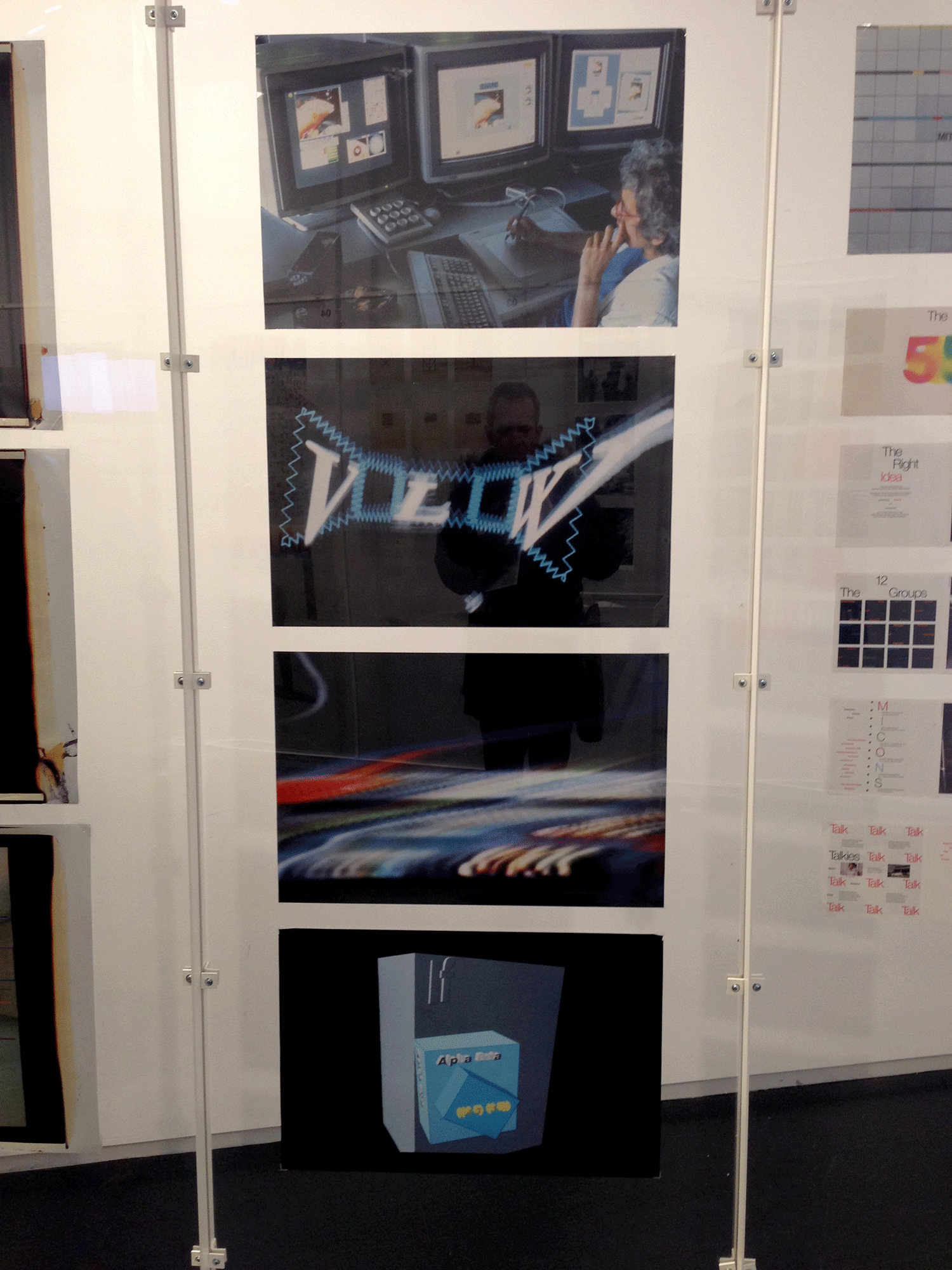
Compare to an Australian graphic design company called Inkahoots, which used to be hesitating in moving to new technologies in 1990s its actions and while it was facing economic pressure and wanted to continue using screen-printingdue the widespread change from printed pages to digital technology (Poynor, 2013) , Cooper didn’t keep distance with computer-graphics technology or even see it as a new tool for handling graphic design work but understood from the beginning that the digital world opened up a whole domain of issues and problems, and she wanted to understand these problems in a rigorous way. (Abrams, 2015) According to Poynor (2013), as what Inkahoots found out, stacked up against digital technology and offset printing, manual screen-printing seemed out-moded both as a relevant art form and as an effective form of mass production. Frustrated with the limitations of the printed page, (Carlos, 2014) Cooper determined to shift her direction from being a conventional print-based graphic designer to a computer graphichs cartographer (MIT News, 1994) for pursuing a non-linear, more dynamic and less rigid experience. Aaccording to Bill Mitchell, Ddean of MIT’s School of Architecture and Planning, “Cooperrchitecture and Planningk, Muriel was a real pioneer of a new design domain,” and was the first graphic designer to carry out really profound explorations of the new possibilities of electronic media—things like 3-D text. (Abrams, 2015).
This move from print to digital, or from flat to dimensional, is not an easy progression at all (Sellers, 2017) but showing Cooper’s remarkable courage and determination, as what Abrams revealed in his piece, that Cooper as a woman who could not even write code at the beginning, but was hooked on computers just to compete her dream of visually demonstrating all the possibilities from her head (Abrams, 2015). Aiming at making the process of delivering the graphic design style and theory approachable and user-friendly, Cooper came with her primary mission of creating more readable content based on the reader’s interest, (Sellers, 2017) as what she has stated, that “information is only useful when it can be understood”. (Abrams, 2015)
Modern designers like Cooper, didn’t hesitate for too long, even they were facing such challenge of keeping steps with the rapidly changing technology, but still attempted to shift direction and take actions immediately for their continuing pursuit. With their design principle and technology upgraded, they aimed to provide a whole new visual experience and lead users to rethink the relationship between static to dynamic media.
Sellers, L. (2017). Women design.
Abrams, J. (2015). American Institute of Graphic Arts. Muriel Cooper. Retrieved from https://www.aiga.org/medalist-murielcooper
Shen, M. (2014). This Stands as a Sketch for the Future: Muriel Cooper’s Messages and Means. Art in America.
Young, D. (2014). Inventing Interactive. Messages and Means: Muriel Cooper at MIT. Retrieved from: http://www.inventinginteractive.com/2014/03/27/messages-and-means-muriel-cooper-at-mit/
Carlos, D. (2014). Muriel Cooper. Turning Time into Space. Retrieved from: https://walkerart.org/magazine/muriel-cooper-turning-time-into-space
MIT News. (1994). Muriel Cooper, 68, dies; noted graphic designer.
Retrieved 2014-03-30. http://news.mit.edu/1994/cooper-0601
Poynor, R. “inkahoots and socially concerned design part 1”.
Trankle, S. A., & Haw, J. (2009). Predicting Australian health behaviour from health beliefs. Electronic Journal of Applied Psychology, 5(2), 9–17. Retrieved from https://epubs.scu.edu.au/tourism_pubs/328/
Church, J. (1987). “Fighting Fire with Fire — Cultural Movements,” Imprint, vol. 22 no. 3/4, December 1987, p. 15.

 Design Ideas
In my opinion, information is only ever useless when it is in the hands of someone who doesn’t know how to use it, can’t use it or doesn’t share it. I feel that rather than needing a understanding for information to be useful it is in fact information that leads to understanding, i see gathering information a solving a puzzle as more is gathered a picture starts to form and with only a few pieces it is extremely hard to gain any understanding of the usefulness or in this case the picture.
In science information which isn’t understood is sought after rather than turned away, some of the greatest breakthroughs in human histories have been the results of these types of information. In fact physics itself currently has all systems based upon information which we don’t understand, such as string theory and quantum theory both have given us accurate and correct results on almost all places they have been applied however one can not be correct if the other is as they have conflicting parts, yet neither have been proven wrong and we have no idea which one is right, yet they have both lead to great leaps in the field of physics.
Another important aspect for information to be useful is that it is communicated efficiently, this can be seen clearly in seen clearly in team sports or games where the sharing of information is crucial in both assisting your team mates and countering the opponent. multiplayer competitive games often have teams on a voice channel providing constant streams of information, from opponent positions, equipment, tactics, objective progress and the list goes on.
In conclusion, there isn’t useless information only people who can’t/don’t use it, information that is not understood simply requires more information, this is the idea that physics is built upon and it is this unknown that pushes the field further. Communication is also key to the usefulness of information as the usefulness of information multiples with each person that knows it.
LikeLike