The Vivid Form of the Weaver

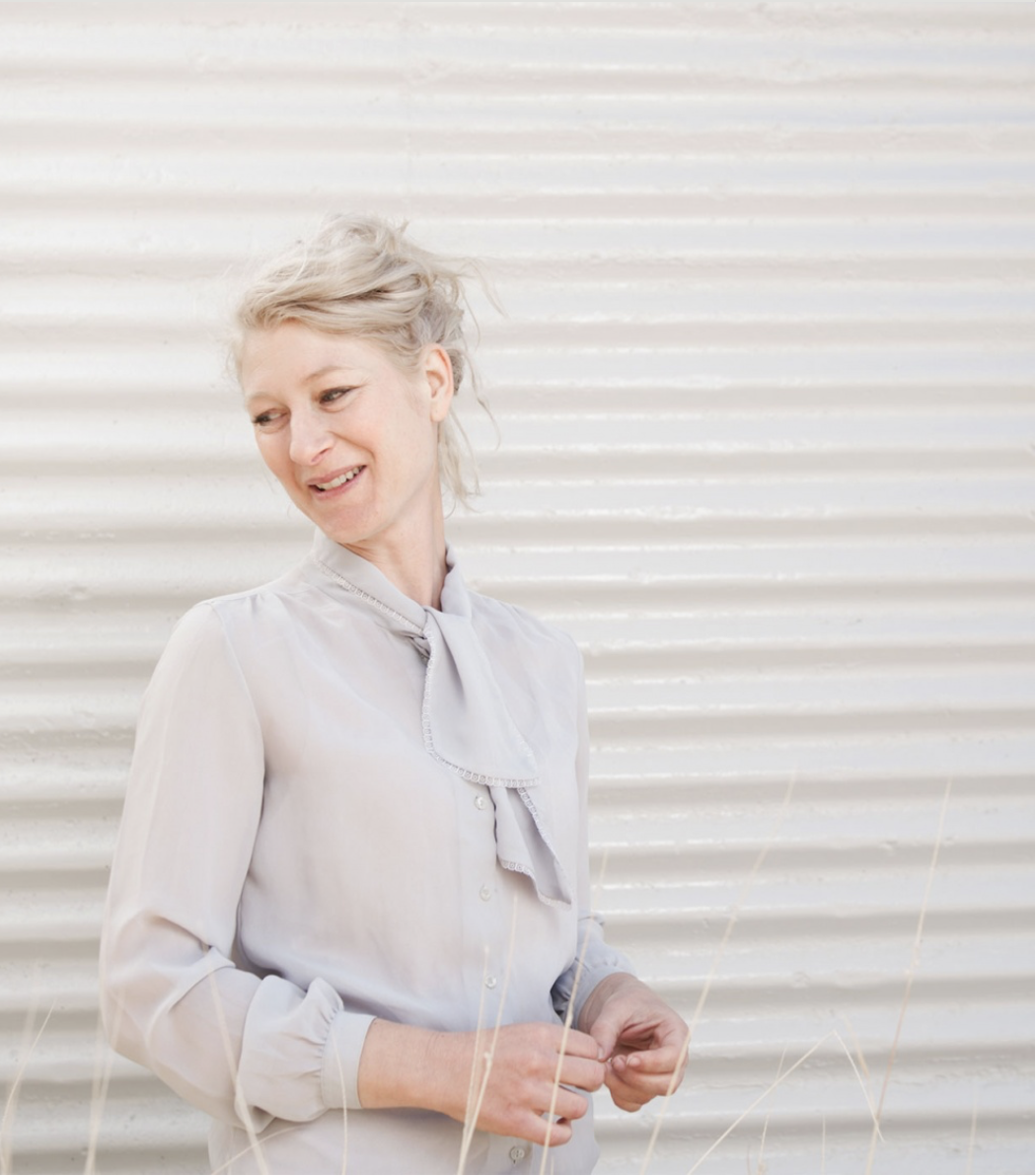
        Elliat Rich is a women Austrian designer based in Alice Springs. She devotes to increase equality between people bymaking exhibition design, public art and furniture, product developmentin a studio called Elbow Workshop that founded by her and her partner in 2014, (Elbow workshop, 2018)I was impressed and touched when seeing some of her works in the Melbourne Design Week Designing WomenExhibition, which in my impression they were surprisingly eye-catching without their functions disappeared. I could see designer’s fearlessness and creativity, especially from her work Weaver (2018)from the Other placeseries. In this case study, I realized that there is a tendency unavoidably to see designing women are far less prominent than mendue to a narrow lens of modernism, which has resulted in the marginalisation of women’s careers and work, with their works being obscured from the historical record. (LeAmon,2018)However, women whohave boldly challenged this gender prejudice at this time make their own works stand out and precious since they allow us to see the ongoing role of female designers as a dynamic and critical force in shaping a contemporary society with more diverse creativity. (LeAmon,2018)
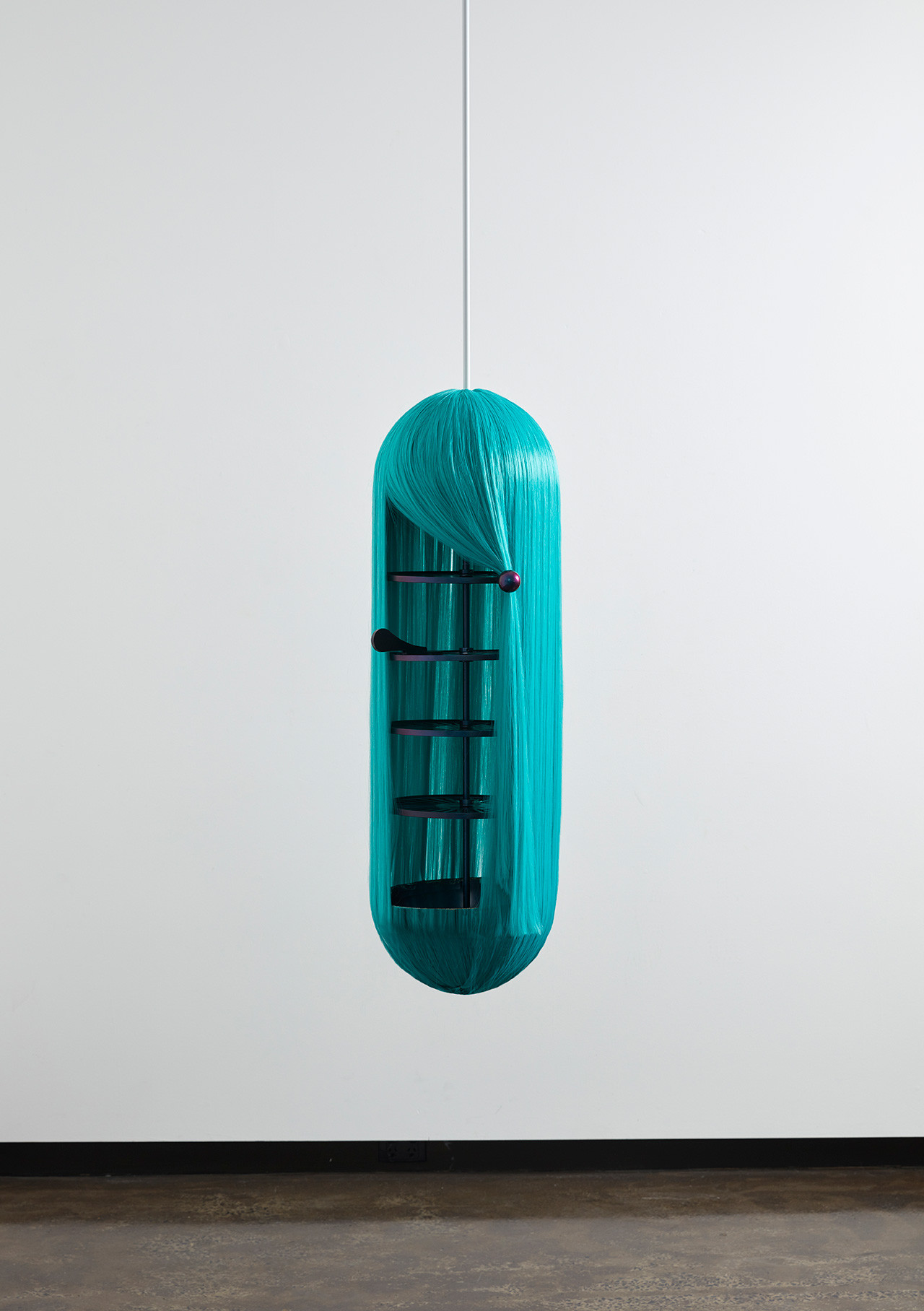
         Elliat’s “Weaver”, looks like a huge wig, which in fact is an amazing dangling cupboard, (The Design Files, 2018),a cabinet of curiosity and a sculpture in equal measure.(Carolan,2018)According to Carolan, Weaver is a 1000 * 300 * 300 mm cylindrical shelf suspended from the ceiling. It’s very long at the first sight. With it sheathed in a curtain of turquoise synthetic fibre – the kind which is used in wigs, this novel work looks incredibly interesting. Inside, four aluminiumshelves are coated in pearlescent chameleon paint that glitters, becoming iridescent as the light falls on it. Carolan stated that “The invitational tactility of its shape, the unexpected weight of the curtain of hair and the verisimilitude of the synthetic material is near irresistible.” (Carolan,2018)On one hand, this work is quite playful both in form and in the sensuality of the materials, and also the blue- green colour, which covers the most of its body, showing the designer’s ability to experiment, and the sense of freedom that comes from the place in which she works. On the other hand,its magnetic qualities are amplified by the practical utility of the piece and its alien allure is heightened by the familiarity of the gesture that inspired it – the hair of curtain begging to be pulled back and affixed behind a metallic “ear”. (Carolan,2018)
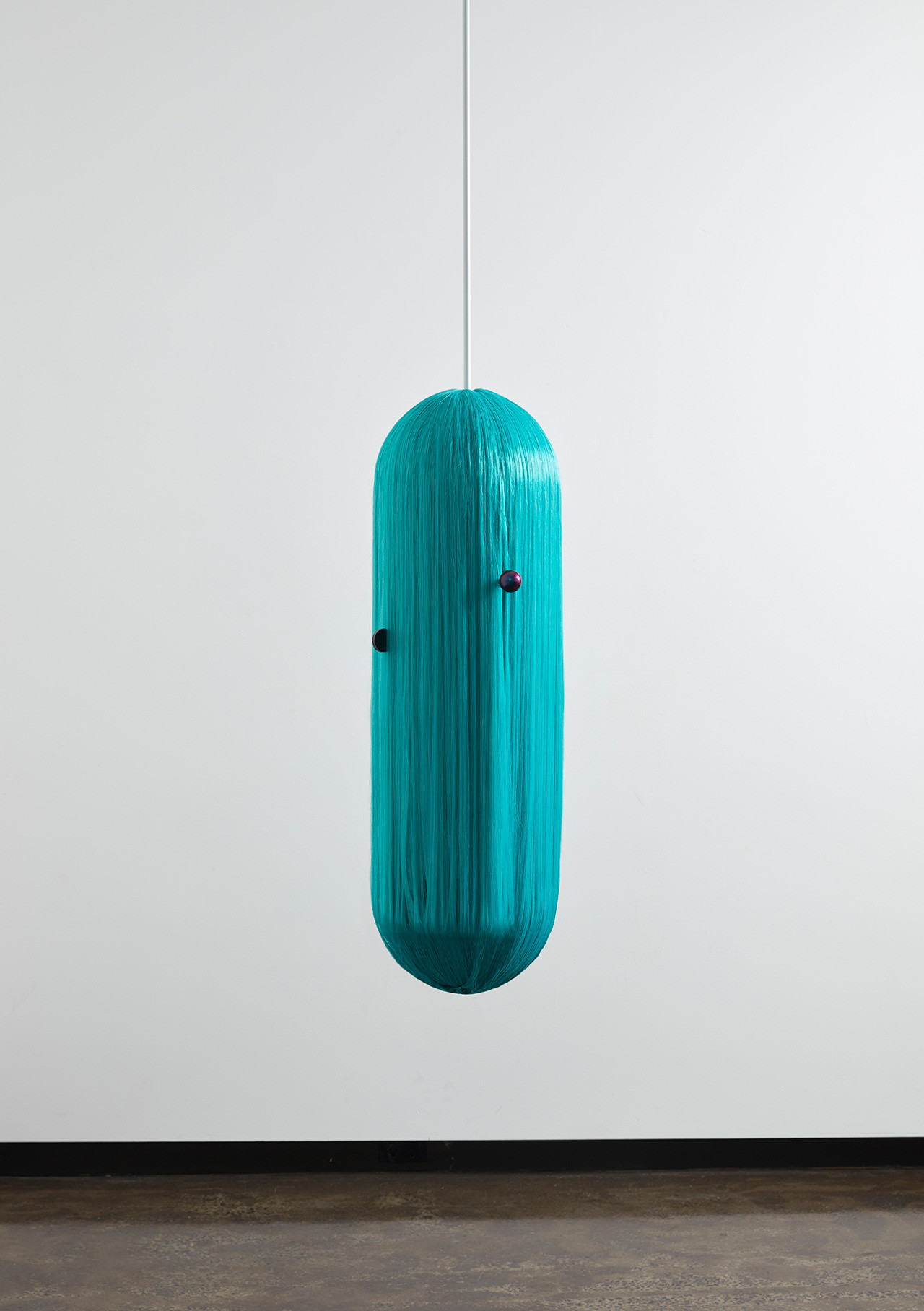
          I was fascinated by the futurist idea of the human-like element – a woman head shape with a blue wig, is surprisingly integrated into a furniture concept. The designer didn’t create any amazingly new forms but just played around with something that we are familiar with, which at the end came out with a visual surprise. It seems not just the designer showing off how her work is aesthetically pleasing but its novel elements are also practically functional. It’s funny to see when a user tries to open the curtain but it is just like someone brushing away her bang and tucking hair behind her ears. It seems the designer was giving her design a human personality while providing users a sense of optimism and excitementand crafting a new vision of future furniture.(Barr, 2018)

          By the vivid capsule form of Weaver, Richtries to lead us to consider the possibilities of a brighter, more hopeful future by the aid of design, and to look at the people, places and events that matter to us most. Rich stated that “I really feel as designers that we have this amazing opportunity to inspire visions of the future. At the moment there’s this dark, dystopic idea that the future is dark and that technology is going to kill us. There are very few beautiful visions of the future that give us hope and instructions or a clear vision of where we can go.”(Carolan,2018)With her many interesting projects on the horizon, Rich are always positive about the future and insists on spreading her spirit. (Barr, 2018)She is also working on an extraordinary project of designing and manufacturing a new product in Alice Springs. (Barr, 2018) She seems consistently grateful for all the opportunities and freedom her unique location – a city with central desert landscape, that have offered her, which maybe the basis of her optimism. Rich sees it as her responsibility to find the positive meaning in what her do and believes that as a designer, she can make a valuable contribution to her community, as well to live as close as possible to her own ethical belief systems. (Barr, 2018)

            The Weaver has less chance to be achieved by a man designer because this unique way of using the design as a way of combining figure and furniture, and as a means of navigating toward the future more based on the feminine traits of gentleness and sensitivity. Cooperate with machinery and technology, contemporary design is being questioned, challenged and transformed by both male and female designers. Rich believed that anyone who is working in a creative field has the innate potential to make startling propositions that can in turn lead to collective consensus and a new fascinating view of modern design industry.

Simone LeAmon. (2018). Designing Women. Retrieved from https://www.ngv.vic.gov.au/essay/designing-women/

Elbow Whop. (2018). About Eillat. Retrieved from http://www.elliatrich.com/elliat-home

The Design File. (2018). Designwork 02 At Sophie Gannon Gallery. Retrieved from https://thedesignfiles.net/2018/03/designwork-02-at-sophie-gannon-gallery/

Nicholas Carolan. (2018). From the Red Centre to the Heart, Design That’s Going Places. Retrieved from https://grazia.com.au/articles/elliat-rich-interview/

Philippa Nicole Barr. (2018). Australia. A profile of Elliat Rich. Retrieved from https://www.domusweb.it/en/design/2018/08/10/australia-a-profile-of-elliat-rich.html
Information Is Only Useful When It Can be Understood

            Muriel Cooper (1925 – 1994), as an American female professor of interactive media design, was one of the co-founder of the MIT media lab. (Sellers, 2017) In addition to being the founder, Cooper took it as her responsibility to direct the office of publication, by putting a large amount of efforts, such as promoting the Bauhaus-influenced design style into its publications, (Shen, 2014), challenging herself constantly on studying computer programming, leading and teaching a group of students to produce modernist graphic design by using this new technology. (Abrams, 2015) Throughout all these attempts, Cooper sought to pursuit the possibility of a huge amount of flexibility that come from computers but print-based design cannot have. (Abrams, 2015) Cooper has long been considered a pioneer and revolutionary as design moved into the digital era, but her work hasn’t been shown very much. (Young, 2014) Before they can be widely discussed and appreciated, Cooper died suddenly of a heart attack in 1994 at the age of 68, (Abrams, 2015) she has then become a valuable but forgotten superhero who has transferred design into a new landscape. (Abrams, 2015) 

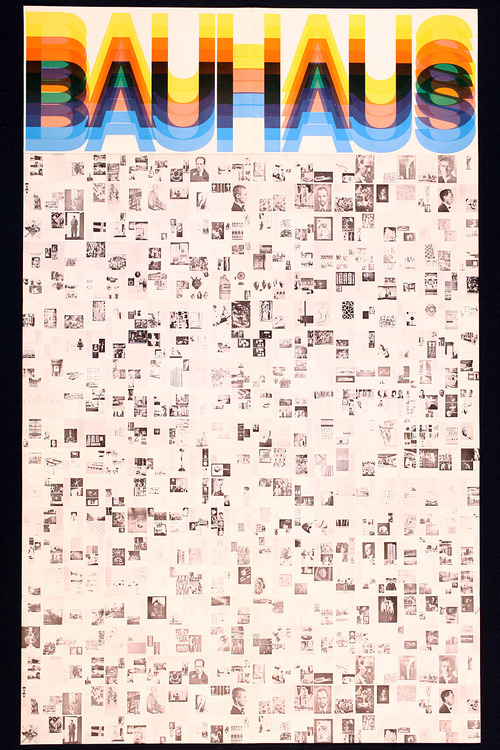
Muriel Cooper, Poster to promote the Bauhaus, 1969

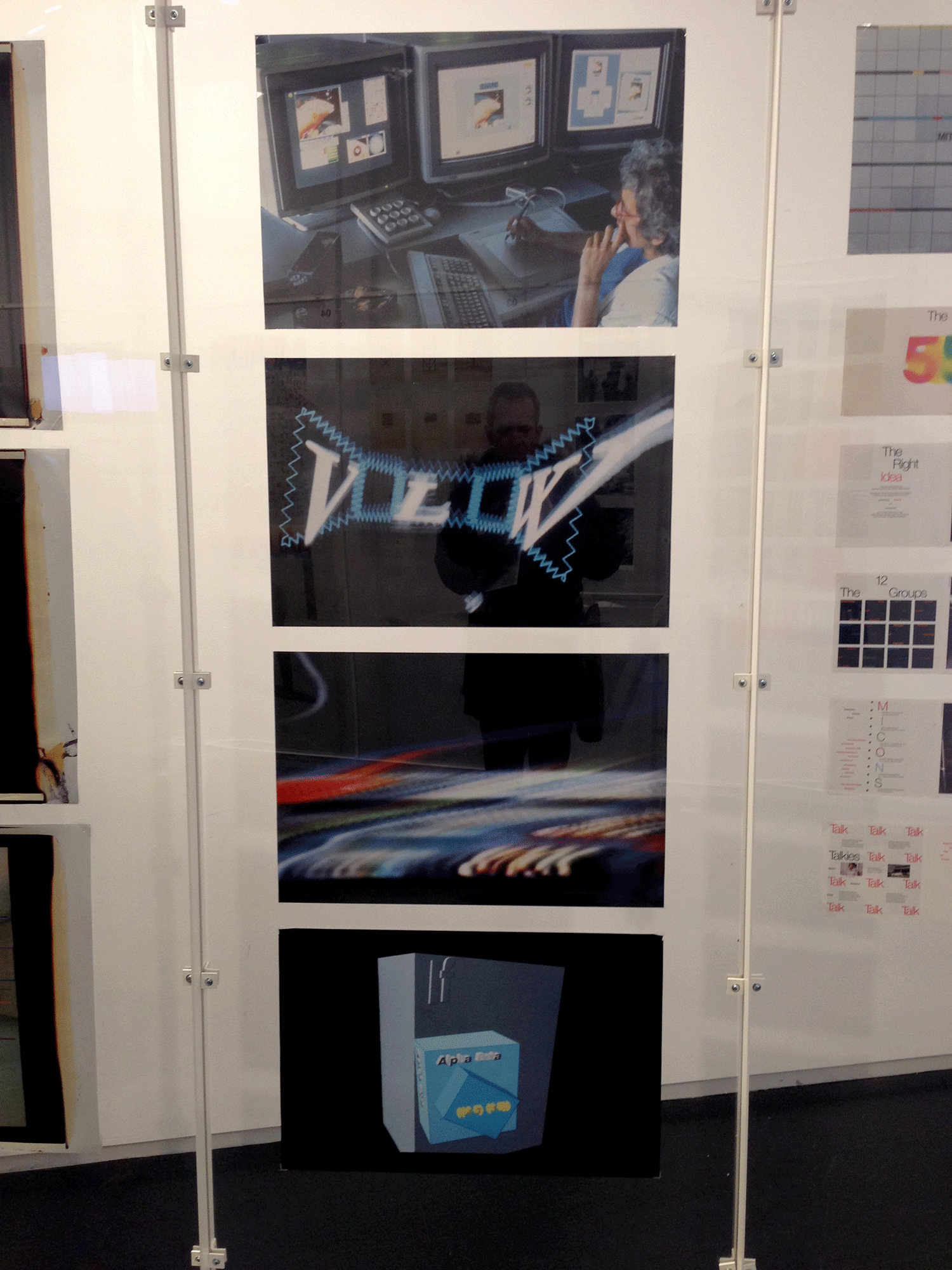
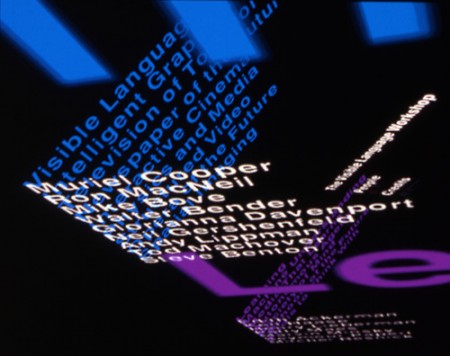
According to Abrams, the work shown at TED5 represented a leap in computer typography. (Abrams, 2015) This new type of interface design – a set of communication vocabularies with motion and sound, (Abram, 2015) is considered as an essential visual experimentation (Seller, 2017) with Cooper’s whole enthusiasm on computer animation. (Abrams, 2015) By such design programming, we can see in the animation, the shape, size, colour and translucency of key components are made to change in correspondence with a given sound and its temporal duration. They are expanding or bouncing with variable diffusion of color across its surface in a way that Cooper called “on- they- fly scaling” to catch viewers’ attention and deliver the information effectively. (Abrams, 2015) Not in a too complex way to show off the new technique, Cooper always made sure such multi-dimensional effect (Seller, 2017) are readable to users. (Abrams, 2015) At this time, it was a refreshingly newfound mindset on design, and was from an important part of the fearless identity of Cooper. (Seller, 2017)

Muriel Cooper with David Small, Suguru Ishizaki and Lisa Strauseld, still from Information Landscapes, 1994

           Compare to an Australian graphic design company called Inkahoots, which used to be hesitating in moving to new technologies in 1990s its actions and while it was facing economic pressure  and wanted to continue using screen-printingdue the widespread change from printed pages to digital technology (Poynor, 2013) , Cooper didn’t keep distance with computer-graphics technology or even see it as a new tool for handling graphic design work but understood from the beginning that the digital world opened up a whole domain of issues and problems, and she wanted to understand these problems in a rigorous way. (Abrams, 2015) According to Poynor (2013), as what Inkahoots found out, stacked up against digital technology and offset printing, manual screen-printing seemed out-moded both as a relevant art form and as an effective form of mass production. Frustrated with the limitations of the printed page, (Carlos, 2014) Cooper determined to shift her direction from being a conventional print-based graphic designer to a computer graphichs cartographer (MIT News, 1994) for pursuing a non-linear, more dynamic and less rigid experience. Aaccording to Bill Mitchell, Ddean of MIT’s School of Architecture and Planning, “Cooperrchitecture and Planningk, Muriel was a real pioneer of a new design domain,” and was the first graphic designer to carry out really profound explorations of the new possibilities of electronic media—things like 3-D text. (Abrams, 2015).

           This move from print to digital, or from flat to dimensional, is not an easy progression at all (Sellers, 2017) but showing Cooper’s remarkable courage and determination, as what Abrams revealed in his piece, that Cooper as a woman who could not even write code at the beginning, but was hooked on computers just to compete her dream of visually demonstrating all the possibilities from her head (Abrams, 2015). Aiming at making the process of delivering the graphic design style and theory approachable and user-friendly, Cooper came with her primary mission of creating more readable content based on the reader’s interest, (Sellers, 2017) as what she has stated, that “information is only useful when it can be understood”. (Abrams, 2015)

Image from 1988-89. Cooper at workstation, responsive typograph, slide image of computer graphics, 3D program representation.

Modern designers like Cooper, didn’t hesitate for too long, even they were facing such challenge of keeping steps with the rapidly changing technology, but still attempted to shift direction and take actions immediately for their continuing pursuit. With their design principle and technology upgraded, they aimed to provide a whole new visual experience and lead users to rethink the relationship between static to dynamic media.

Sellers, L. (2017). Women design.

Abrams, J. (2015). American Institute of Graphic Arts. Muriel Cooper. Retrieved from https://www.aiga.org/medalist-murielcooper

Shen, M. (2014). This Stands as a Sketch for the Future: Muriel Cooper’s Messages and Means. Art in America.

Young, D. (2014). Inventing Interactive. Messages and Means: Muriel Cooper at MIT. Retrieved from: http://www.inventinginteractive.com/2014/03/27/messages-and-means-muriel-cooper-at-mit/

Carlos, D. (2014). Muriel Cooper. Turning Time into Space. Retrieved from: https://walkerart.org/magazine/muriel-cooper-turning-time-into-space

MIT News. (1994). Muriel Cooper, 68, dies; noted graphic designer.

Retrieved 2014-03-30. http://news.mit.edu/1994/cooper-0601

Poynor, R. “inkahoots and socially concerned design part 1”.

Trankle, S. A., & Haw, J. (2009). Predicting Australian health behaviour from health beliefs. Electronic Journal of Applied Psychology, 5(2), 9–17. Retrieved from https://epubs.scu.edu.au/tourism_pubs/328/

Church, J. (1987). “Fighting Fire with Fire — Cultural Movements,” Imprint, vol. 22 no. 3/4, December 1987, p. 15.